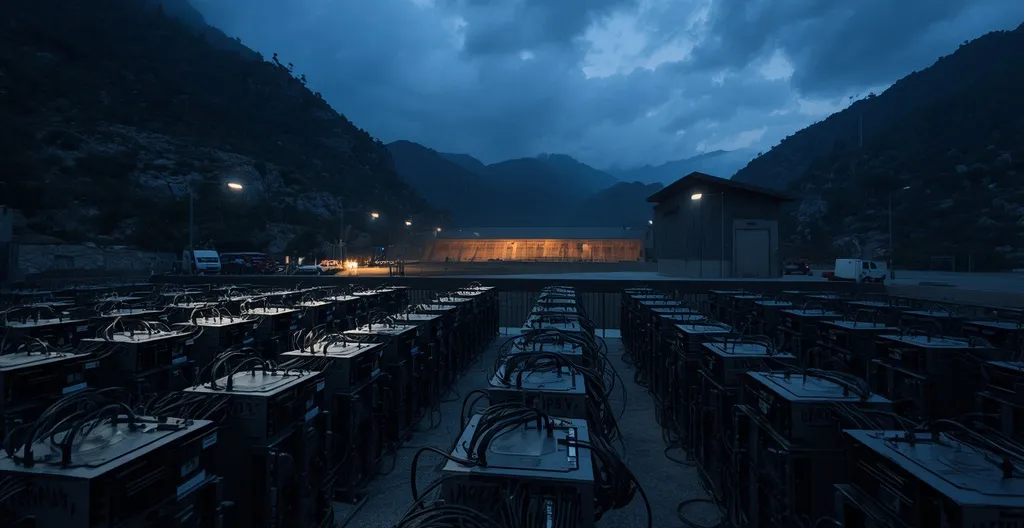

Chainflip says a flaw in its TRON memo-handling logic, not TRON itself, led to the loss of 736, 442.17 USDT. The annoying truth is simple: the chain may have been fine, the token may have been fine, and the bug still got paid.
- Six unauthorized payouts drained Chainflip’s vault
- TRON memo handling was the weak point in Chainflip’s integration
- No reported compromise of TRON, USDT, or Tether as of Sept. 13
- Network paused; fix completed; restart planned “until Monday at the earliest”
Chainflip said the incident happened in the early hours of Sept. 12 and was disclosed in a Sept. 13 update. According to the protocol, an attacker exploited how its TRON integration processed transaction memos, the extra data attached to a transfer that Chainflip uses to interpret swap instructions, and triggered unauthorized payouts from its vault. Chainflip loses 736, 442 USDT in TRON exploit
In plain English: the protocol appears to have trusted the wrong bit of transaction metadata at the wrong time. That is all it takes for a clean-looking swap flow to turn into a theft path. Automation is great until it starts paying the wrong person and calling it efficiency.
Chainflip said the attacker repeated the same deposit pattern eight times over roughly ninety minutes. The early attempts used smaller amounts, while later attempts were close to twice the size of the one before them. Six of those eight attempts produced unauthorized payouts, totaling 736, 442.17 USDT.
One legitimate user swap worth 115, 654.41 USDT remains unpaid, and Chainflip said those funds are still sitting in its vault. The protocol also said no other funds were affected.
That distinction matters. A cross-chain protocol is a system that lets assets move or be swapped across different blockchains, which means it has to juggle signatures, routing, metadata, and refund logic. If any one of those steps is handled loosely, the whole thing can become a soft target. Cross-chain doesn’t fail only at the chain level; it fails at the glue code level, where assumptions go to die. For a deeper look at the system behind this mess, see What is Chainflip? The Complete Guide to Native Cross-.
Based on Chainflip’s description, the exploit centered on how its TRON path interpreted memo data during validation and refund handling. The attacker apparently manipulated that process so the protocol treated the deposit path in a way that led to a refund on top of the original payout. That is not a TRON-chain compromise, and it is not evidence that USDT or Tether’s reserve system was breached. It points to a Chainflip application-layer bug, the sort of mistake that leaves the underlying blockchain untouched while the protocol itself bleeds out.
Chainflip has paused operations while it finalizes the fix and restart plan. The team says the fix is done, but the network will remain offline “until Monday at the earliest”, which means Sept. 14 is the earliest possible restart, not a promise carved in stone. A few outlets have framed it similarly, including Chainflip Halts Network After $736K Tron USDT Exploit and Chainflip Suspends Operations After $736, 442 USDT Theft via, while Chainflip Loses $736K in Tron USDT Exploit, Pauses Until highlighted the pause until Monday.
Chainflip also said it will compensate affected users, but as of Sept. 13 it had not published how that reimbursement will work. Whether the money comes from treasury assets, insurance, protocol revenue, or some other source remains unanswered. “We’ll make users whole” is easy to say. Doing the accounting without creating a second mess is the part that tends to sting.
The protocol has not published individual transaction hashes, destination wallet addresses, or a breakdown of the six payments. That leaves outside analysts with Chainflip’s own account for now, not a fully verifiable forensic trail. No independent security assessment confirming the full picture had been published as of Sept. 13, though other reports, including Chainflip loses 736, 442 USDT in TRON exploit, have tracked the same core claim.
Chainflip did say it flagged the moving funds with relevant parties as they traveled through the market, but it did not specify who those parties were. It also did not say whether Tether, TRON, centralized exchanges, or chain analytics firms are actively helping trace or freeze the funds. As of now, recovery is still an open question, not a solved one.
The broader lesson is blunt. Cross-chain infrastructure can be elegant on paper and brittle in the wrong place. Memo fields are often treated like harmless note pads, but if a protocol uses them to route swap instructions, they become part of the security boundary. That boundary needs to be treated like live ammunition, not a sticky note.
Chainflip’s own incident response is standard for a live-value protocol: pause operations, contain the blast radius, fix the bug, then restart only after safety checks are complete. That is the right instinct. The real test comes after the restart, when the protocol has to prove the hole is actually closed and not just temporarily taped over with “please trust us” energy.
There is also some useful context from earlier this year. CryptoTimes reported that Chainflip had already dealt with a separate attempted exploit on Aug. 24 involving cross-chain messaging and refund logic on Ethereum. That earlier scare did not result in user fund losses, but it does underline a pattern: refund and message-handling logic is a nasty place to get sloppy. Attackers love the seam where one system hands responsibility to another.
TRON itself is not the villain here. It is widely used for low-fee stablecoin transfers, especially USDT movement, which is exactly why integrations around it matter so much. The lesson is not that TRON is broken; it is that protocol teams need to be ruthlessly careful when they build on top of it. The base layer can be sound while the middleware faceplants into the wall. Tron Surges to Second in USDT Supply: Stablecoin Dominance and TRON Hits $7.9 Trillion in USDT Transfers in 2025 both show why that usage footprint makes every integration choice matter. Even consumer-facing plays like Kolo and TRON Team Up for Lightning-Fast USDT Crypto Card depend on getting the plumbing right.
Chainflip said a full technical report will be published after the restart plan is finalized and the network is operating securely. That report will matter, because the crypto industry has seen more than enough hand-waving after losses. If a protocol wants credibility, it needs more than a vague mea culpa and a promise to do better next time.
Key takeaways
-
Was TRON hacked?
Chainflip’s reporting points to a bug in its own TRON integration, not a compromise of the TRON blockchain itself. -
How much was lost?
Chainflip said 736, 442.17 USDT was lost through six unauthorized payouts. -
Were all user funds drained?
No. Chainflip said only the affected TRON USDT path was hit, and one legitimate swap worth 115, 654.41 USDT remains unpaid in the vault. -
When will the network return?
Chainflip said the network will stay paused until Monday at the earliest, with the restart still dependent on final safety checks. -
Will users be reimbursed?
Chainflip says yes, but it has not yet said whether reimbursement will come from treasury assets, insurance, or another source. -
What caused the exploit?
Chainflip says the attacker exploited how its TRON memo-handling logic interpreted swap instructions, which led to unauthorized payouts.
The immediate stakes are straightforward: Chainflip needs to prove the fix holds, explain how reimbursements will work, and publish a technical report that actually teaches something. Anything less would leave users with the same old crypto industry special: a loss, a pause, and a nicely worded shrug.