Galaxy’s 4.2GW Texas buildout clears a conditional ERCOT checkpoint
Galaxy has landed a conditional classification for a massive 4.2GW Texas portfolio under ERCOT’s Batch Zero process. That is a real milestone, but it is not a final green light. The headline sounds big because it is, but the key detail is that “conditional” still means the grid has not handed out a blank check.
- 4.2GW is utility-scale, this is industrial power, not boutique mining.
- Batch Zero is real, ERCOT uses it for large loads of 75MW or more.
- Conditional is not final, this is a process step, not full approval.
- The label is muddier than the headline, the available material points to data center projects, not a fully verified Bitcoin-only portfolio.
ERCOT, the Electric Reliability Council of Texas, runs most of the state’s power grid and market. That gives it unusual influence over any project that wants to plug in at scale. For a company like Galaxy, getting through ERCOT’s large-load process matters because power is not just one input among many. It is the whole damn business.
ERCOT’s large-load materials confirm that Batch Zero is a formal path for load facilities of 75MW or greater. In other words, this is not some ceremonial stamp for a press release. It is a structured review process for very large electricity users, with forms, validation, and grid planning attached.
The cleanest way to read the available information is this: Galaxy’s Texas projects have advanced through a conditional ERCOT classification under Batch Zero, and the portfolio is large enough to make even seasoned power-market watchers sit up. What is not confirmed by the material alone is that every megawatt in the 4.2GW figure is already built, energized, or locked in as Bitcoin mining capacity.
That distinction matters. Crypto headlines love to flatten a technical screening step into a victory lap, and that is how fuzzy numbers get dressed up as hard reality. A large-load classification is not the same thing as a final operating approval. It is a checkpoint, not a coronation.
The other nuance here is terminology. The available material describes Texas data center projects, while the headline frames them as a Bitcoin mining portfolio. Those are related in crypto infrastructure, but they are not identical. A data center can house Bitcoin miners, AI workloads, cloud compute, or a mix of everything depending on the business model. Based on what is actually supported, the safest framing is that Galaxy has moved forward with a giant Texas digital infrastructure buildout that may include Bitcoin mining, but the full use case for all 4.2GW is not proven by the provided material.
That is not a nitpick. It is the difference between accurate reporting and hype with a hard hat on.
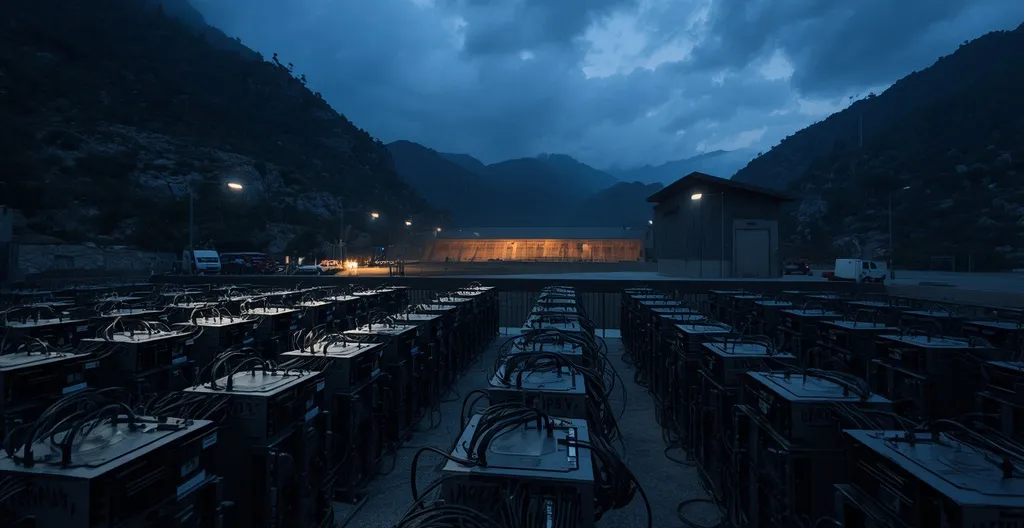
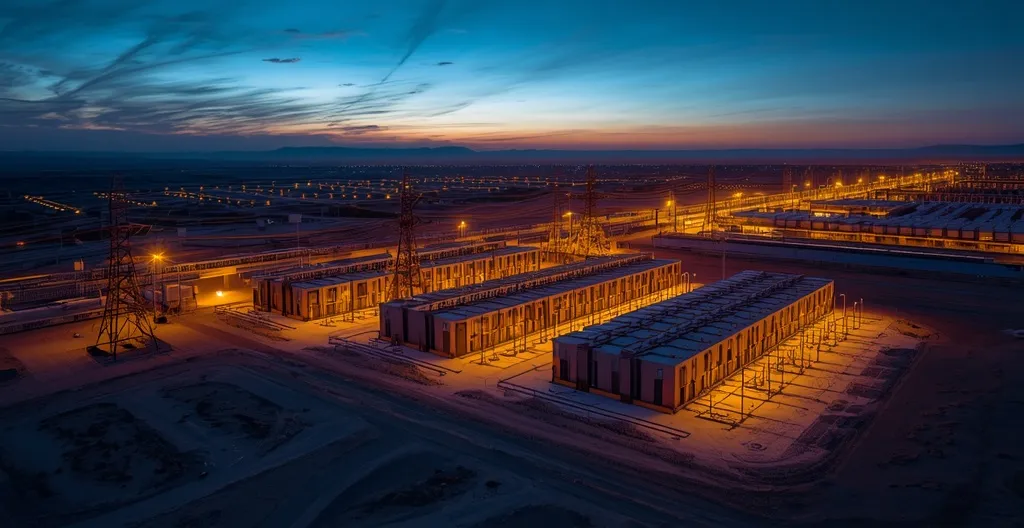
Still, the scale alone is the story. 4.2GW is enormous by any standard. For Bitcoin mining, it points to a serious industrial footprint and a company that is not thinking in warehouse-sized increments. This is grid-scale power planning, not a couple of containers and some fans screaming in the desert.
The research notes point to five named projects, Helios I, Helios II, Caspian, Selene, and Helios III, that received conditional classifications under the Batch Zero process. According to those notes, Helios I and Helios II were classified as Base Load and are on track for 2028 energization, while Caspian, Selene, and Helios III were classified as Studied Load. That split suggests a staged review process, not one giant “approve everything” button.
Those terms can sound opaque, so here is the practical takeaway. A Base Load classification generally signals a more established or planned load profile, while a Studied Load designation means the project still needs further review and capacity allocation before it can move forward. The exact operational implications depend on ERCOT’s process, but the broad message is simple: some parts of the portfolio appear further along than others.
ERCOT’s own documentation also matters for context. Its large-load interconnection update materials show that Batch Zero is aimed at loads of 75MW or greater, and the process involves formal submission and verification steps for large interconnections. That tells you this is a serious transmission and planning issue, not just an administrative hurdle for a flashy project logo.
Texas is a natural battleground for these kinds of developments because the state’s grid structure and power market make it unusually attractive to energy-intensive operators. Large loads can be useful if they are flexible and disciplined. They can curtail during stress, absorb excess power when supply is strong, and help make the system more dynamic.
But there is a darker side too, and pretending otherwise is just marketing with better lighting. Very large loads can strain transmission planning, crowd scarce infrastructure, and create a lot of noise before the actual capacity exists. If financing slips, construction drags, or the operational model changes, that shiny gigawatt number can turn into a very expensive promise.
So both camps have a case. Bitcoin miners and other flexible load operators argue that they can support grid stability and monetize surplus generation. Skeptics warn that these projects can overpromise, overbuild, or lean too hard on the assumption that power will always be available when needed. Physics, unsurprisingly, does not care about pitch decks.
The bigger picture is that Galaxy is not behaving like a small-time miner chasing quick-cycle hash revenue. This looks like an attempt to build durable infrastructure at the intersection of Bitcoin, energy, and digital compute. That is the kind of move that could matter for years, not weeks, if the company can turn conditional classifications into operating assets on schedule.
And that is the real story here: not just that Galaxy got a nod from ERCOT, but that the nod is only the beginning. The hard part is still ahead, final approvals, buildout, energization, and proof that the load actually materializes the way the paperwork says it will.
Key questions and takeaways
-
What does ERCOT Batch Zero mean?
It is a formal ERCOT process for very large loads, specifically facilities of 75MW or greater. It helps the grid operator review how major power users fit into the system. -
Does conditional classification mean final approval?
No. Conditional status is a step forward, but it is not the same as full operating authorization or guaranteed energization. -
How big is 4.2GW?
Huge. It is utility-scale power capacity and signals an industrial footprint far beyond ordinary Bitcoin mining operations. -
Is this definitely a Bitcoin mining portfolio?
Not from the material provided alone. The clearest supported wording is that Galaxy has conditional ERCOT classifications for Texas data center projects, which may include Bitcoin mining but are not proven to be mining-only. -
Why does Texas matter so much?
ERCOT manages most of the Texas grid, and the state has become a major hub for large flexible loads, including Bitcoin mining and other power-hungry digital infrastructure. -
What should readers watch next?
Whether Galaxy secures final approvals, whether the named projects reach energization on schedule, and whether the promised load actually shows up on the grid instead of living forever in regulatory limbo.
Further reading
A few extra sources for the grid, mining, and Texas power angle behind this buildout:
- Galaxy's 4.2GW Bitcoin (BTC) Mining Portfolio Wins
- Error extracting content
- Five Galaxy Digital Texas data center projects get
- Galaxy Secures Conditional ERCOT Classifications for 4.2
- ERCOT Tightens Texas Grid Access as Bitcoin Miners Face New
- Bitcoin Mining Difficulty Plunges 10.09% as Miners Face
- Google’s $40B Texas Data Center Push: AI Boom Meets Crypto