Thailand’s alleged Bitcoin-property ruling has a date problem
A report says Thailand’s Supreme Court recognized Bitcoin as property in a robbery case, but no judgment or official court summary has been produced to support the claim. The cited case number, 4929/2569, also appears to point to 2026 if its year follows the Buddhist Era calendar. That matters if the decision is being described as already issued.
- The reported ruling remains unverified.
- Case number 4929/2569 appears to correspond to 2026.
- Property status is not the same as legal-tender status.
- The full judgment is needed to assess the court’s reasoning.
What the account claims
The account describes a robbery on Koh Samui in September 2022. It says the victim was threatened and assaulted, then forced to transfer 2.480801 BTC, allegedly worth $50, 000 at the time, to a wallet controlled by one of the attackers.
It also claims the Supreme Court rejected a defendant’s argument that Bitcoin could not be property because it had no intrinsic value. According to the report, the court upheld the defendant’s 10-year prison sentence and ordered the victim to receive the Bitcoin back or be paid compensation of 1.878 million baht.
For now, these details remain claims, not established court findings. The account does not point to a judgment or official court summary that would let readers verify the case number, decision date, legal reasoning, sentence or compensation order.
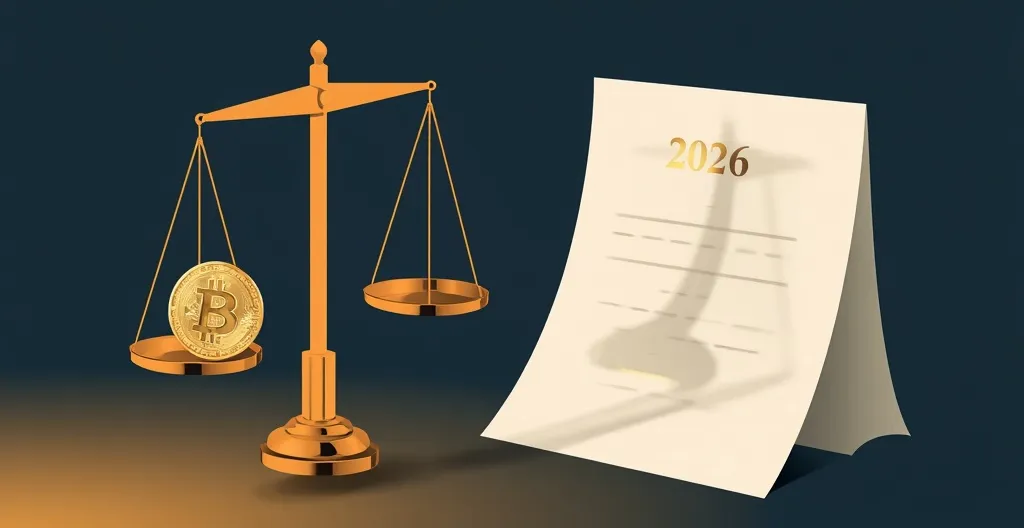
The year in 4929/2569 deserves particular scrutiny. Buddhist Era 2569 corresponds to 2026. That is a red flag if the ruling is being presented as having already been issued, but it does not prove the case number is wrong. The judgment’s date and the court’s case-numbering convention need to be confirmed.
Property does not mean legal tender
Even if a court treats Bitcoin as property for a criminal-law purpose, that does not make it legal tender. Property status concerns whether an asset can be owned or wrongfully taken. Legal-tender status concerns whether the law officially recognizes a form of money for settling payments.
Bitcoin can be transferred between users and exchanged for government-issued currencies. Its market price can fluctuate, too. These characteristics may matter when a court considers value or ownership, but they do not establish what a particular court decided.
The account also cites Sections 137 and 138 of Thailand’s Civil and Commercial Code. Standard English translations generally describe Section 137 as covering corporeal “things” and Section 138 as defining “property” to include certain incorporeal objects that can have value and be appropriated. Those definitions alone do not show how the Supreme Court applied criminal law in this case. Only the judgment can confirm whether the court relied on them and how it interpreted them.
What would confirm the ruling?
The full judgment or an authoritative court summary could settle the main questions: whether the case number is correct, when the decision was issued, which legal provisions the court considered and what it actually held about Bitcoin. Thailand’s broader digital asset business regulations are a separate legal matter. They would not, by themselves, verify this criminal ruling.
Such records would also help distinguish allegations from findings. The reported order to return the Bitcoin or pay compensation does not establish that the victim recovered the funds. And a sentence alone does not explain what the court found about each defendant’s role.
Until those records are available, it is premature to call the decision a confirmed Supreme Court precedent. Even an authenticated ruling would need to be read in context before drawing conclusions about how it might apply to other cases, including the broader Bitcoin property debate.
Key questions and answers
-
Has the reported Supreme Court ruling been verified?
No judgment or official court summary has been identified to substantiate the reported case details.
-
What does case number 4929/2569 indicate?
If the year follows the Buddhist Era calendar, 2569 corresponds to 2026. That raises a timing question, but it does not prove the number is false.
-
Would treating Bitcoin as property make it legal tender?
No. A court can treat an asset as property for a criminal-law purpose without recognizing it as official money for settling payments.
-
What is needed to establish what the court decided?
The full judgment or an authoritative court summary confirming the case number, decision date and legal reasoning.