Bitcoin at a Million Square Sellers? Availability Is Not Adoption
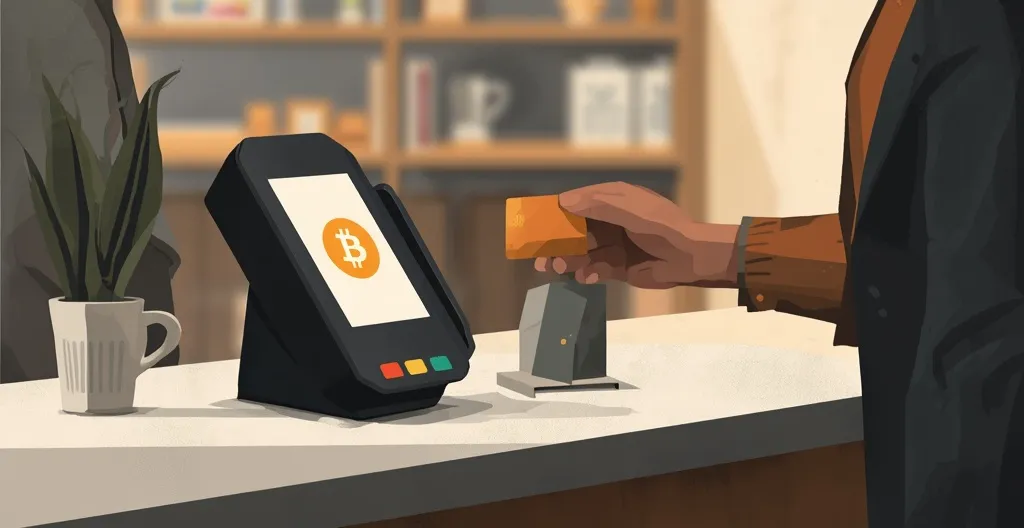
Spiral says more than one million U.S. sellers can accept Bitcoin through Square. That would make Bitcoin available at a lot more checkouts. But it tells us neither how many sellers have completed a Bitcoin sale nor how many customers have returned to pay with it again.
- Access is not activity: A seller who can accept Bitcoin may never receive a Bitcoin payment.
- Spending has friction: Price volatility, familiar payment habits and U.S. tax reporting can all influence a customer’s choice.
- Repeat use is the test: Active sellers and returning buyers matter more than the number of merchants with the option available.
What Does the Million-Seller Figure Mean?
In The Long Road to Bitcoin Payments, a report dated October 27, Spiral, a Block-backed Bitcoin developer, says more than one million U.S. sellers can accept Bitcoin through Square. That figure describes availability, not the number of merchants that have accepted Bitcoin at checkout.
Several steps separate an available payment option from a regular habit. A seller may qualify for the feature without enabling or displaying it. A customer may see the option and choose another way to pay. And one completed sale does not tell us whether the seller or customer will use Bitcoin again.
To measure adoption, Square or Spiral would need to report how many sellers completed at least one Bitcoin sale during a defined period, how many made repeat sales, and the number and value of those transactions. Customer data should distinguish first-time buyers from returning ones. Failed payments and refunds also need clear, consistent treatment. A merchant guide to Square Bitcoin payments can explain how the feature works, but measuring adoption takes transaction data.
Each measure answers a different question. Repeat sales at the same store show that a seller has received Bitcoin more than once. Repeat buyers show that customers are choosing it again. Neither figure can stand in for the other. Square has previously brought Bitcoin payments to one million U.S. merchants, but access and use remain distinct.
Why Might Customers Choose Dollars?
Bitcoin’s appeal as a long-term holding can make it less attractive for everyday spending. Someone who expects BTC to rise may prefer to keep it rather than spend it on lunch, especially if they do not want to buy back the Bitcoin later. Price swings can make that choice harder.
Convenience matters, too. Customers already know how to pay with cards, cash or dollar balances. For Bitcoin to replace those habits, it needs to offer a practical benefit that makes using a different payment method worthwhile. Lower network fees alone do not prove that the total cost is lower. Exchange spreads and conversion costs may matter as well. Renewable energy technologies are a broader consideration for blockchain systems, but they do not resolve the trade-offs at checkout.
U.S. tax reporting can add another step. The IRS’s guidance, How to Answer the Digital Assets Question on Your Tax Return, says exchanging a digital asset for goods or services is a digital-asset transaction “in any amount.” Taxpayers must report these transactions whether or not they result in a taxable gain or loss.
Reporting a disposal does not necessarily mean owing tax. A person’s gain or loss depends on factors such as the asset’s cost basis and its fair market value when spent. The IRS treats gains on assets held one year or less as short-term and gains on assets held for more than one year as long-term. So paying for coffee with Bitcoin can mean keeping records, even if no tax is due.
What Lightning Can and Cannot Solve
Lightning is a payment network built on Bitcoin. It can route payments without recording each small transaction directly on the Bitcoin blockchain, though opening or closing payment channels can involve on-chain transactions. Many Lightning wallets handle channel management behind the scenes, but the experience varies by wallet.
Spiral says eligible Square sellers receive dollars by default when customers pay Bitcoin through the Lightning-enabled flow. Dollar settlement can protect sellers from Bitcoin price swings, but it also means they may not hold BTC. The asset a customer spends and the one a seller receives are separate facts. Square has also introduced real-time Bitcoin payments, putting Lightning at the center of its checkout plans.
That distinction matters when counting Bitcoin payments. A transaction that uses Lightning does not necessarily mean the customer chose to spend BTC. They might, for example, pay from a dollar balance. Useful reporting should identify the asset the customer spent, not just the payment rail, and show what the seller received. Bitcoin is still being used for payments, but evidence of use should not be confused with evidence of recurring adoption.
Stablecoins, tokens designed to track a reference value such as the U.S. dollar, may fit dollar-priced purchases more naturally. They bring their own dependencies, including the issuer, reserve and custody arrangements, redemption terms, and possible limits on access. Every payment method comes with trade-offs.
Questions That Matter
-
Does the reported million-seller figure mean those sellers have used Bitcoin?
No. Spiral says more than one million U.S. sellers can accept Bitcoin through Square. That does not show whether a seller enabled the option, completed a sale or received repeat payments.
-
Does spending Bitcoin always mean owing tax?
No. IRS guidance treats spending a digital asset on goods or services as a reportable transaction, whether or not it produces a taxable gain or loss. Reporting and owing tax are different. The tax result depends on the transaction and the taxpayer’s circumstances.
-
Does a seller receiving dollars mean the customer did not pay Bitcoin?
Not necessarily. A payment flow can involve Bitcoin from the customer and dollars for the seller. Reports should distinguish the asset used at checkout from the one the merchant receives.
-
What evidence would show that Bitcoin payments are gaining traction?
Comparable data on sellers completing Bitcoin sales, repeat sales at those sellers, payment count and value, and customers who return to pay in BTC. Each measure needs a defined time period and a clear explanation of what it includes.
The Real Test Is the Second Payment
Better payment tools can make Bitcoin easier to use. But merchant access is only the first step. Stronger evidence would be customers choosing BTC, sellers completing the sale and both sides returning, rather than a large number of checkout systems that could accept Bitcoin. Square’s automatic Bitcoin payments rollout makes the distinction clear: enabling a feature does not mean customers are using it.