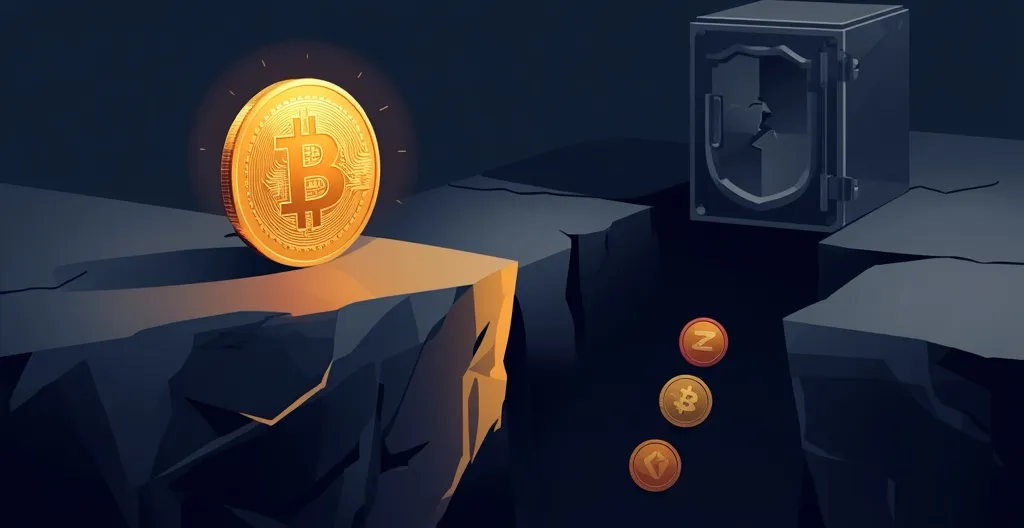

Satsuma shareholders have voted to wind the company down, sell 668 BTC, and delist from its public market venue after a brutal collapse in value. For a Bitcoin treasury play, that’s not a pivot. That’s the emergency exit.
- Liquidation approved: shareholders backed winding down the company
- 668 BTC to be sold: the Bitcoin treasury is being unwound
- Public listing ending: Satsuma is set to delist from London
- Stress already visible: heavy losses, a 99% share-price drop, and a $218 million raise less than a year earlier
According to reporting summarized by The Block and Pluang, Satsuma Technology shareholders approved a liquidation plan that includes selling the company’s 668 bitcoin and removing the stock from London trading. Pluang said the vote passed with 90.6% support and also covered returning capital to investors.
This is a hard reset, not a routine treasury adjustment.
Satsuma had raised $218 million less than a year earlier to pursue a Bitcoin balance sheet strategy, The Block reported. That makes the unwind look especially ugly: a big capital raise, a public bet on Bitcoin treasury finance, then severe losses, a share price that collapsed by 99% according to Pluang, and now a vote to shut the thing down.
That’s the part the pitch decks never linger on. Raising money to buy Bitcoin sounds neat when the stock is climbing and everyone is feeling clever. When the equity gets hammered and financing dries up, the whole structure can turn into a very expensive way to learn that leverage is not a personality trait.
The Block also reported that Satsuma had already sold nearly half its holdings to repay noteholders who declined to convert. In plain English: the company was already under pressure, and the Bitcoin stack was being tapped to keep debt obligations from becoming a bigger mess.
For readers who don’t live and breathe balance sheets, a delisting means shares are removed from the market venue where they were traded. That usually reduces liquidity, limits access for public investors, and can signal that a company is going private, restructuring, or winding down. It is rarely a sign that things are going great.
BTC is simply Bitcoin’s ticker symbol. And 668 BTC is a meaningful corporate holding, even if it is not the kind of sale that changes global Bitcoin pricing by itself. The bigger significance is what it says about the model: another public company built around a Bitcoin treasury appears to have run into the wall of reality.
That does not mean the idea of holding Bitcoin on a corporate balance sheet is dead. It means the model is fragile when it depends on equity-market enthusiasm, favorable financing, and a premium valuation to keep working. Once that premium disappears, a Bitcoin treasury company can become a complicated wrapper around a very simple problem: the business no longer has enough support to keep going.
There is also an important distinction here that gets lost in the hype. Direct Bitcoin ownership is one thing. Buying shares in a public company that uses BTC as its central strategy is something else entirely. Shareholders do not own the coins directly; they own equity, with all the baggage that comes with it, debt, dilution, market risk, and exchange risk.
That’s why these situations should be judged honestly, not romantically. Bitcoin itself is not the problem. A corporate structure that overreaches, then gets squeezed by markets and creditors, is the problem.
The devil’s-advocate view is simple enough: if the strategy is broken, liquidation may be the least-bad outcome. Pretending the thesis still works would just stretch the pain out longer. Sometimes the cleanest move is to shut it down, sell the assets, and return whatever value is left before the damage gets worse.
Some details still matter and were not fully specified in the material available: the exact London venue being delisted from, whether the 668 BTC will be sold all at once or over time, and how the liquidation proceeds will be distributed. But the direction is clear. This is not a tweak. It is a wind-down.
For Bitcoin treasury companies more broadly, Satsuma is a reminder that the upside can be real, but so can the wreckage. These structures can look brilliant in a bull market and brittle as glass when the market turns. The lesson is not that corporate Bitcoin holdings are worthless. It is that a public-company wrapper is not the same thing as owning Bitcoin outright, and the wrapper can crack fast.
That lesson is getting louder as more treasury names pile on debt and hope the market keeps clapping. Recent coverage of Bitcoin treasury firms face debt stress shows how weak BTC pricing can turn “strategic accumulation” into restructuring risk in a hurry. Funny how the charts always look better in a PowerPoint than they do under the glare of an actual margin call.
Not every treasury experiment ends in flames, of course. Some companies are actually cleaning up their financing rather than pretending nothing is wrong. Nakamoto cuts $45M debt is a better example of a team tightening the screws on its structure instead of walking face-first into a liquidation guillotine.
And then there are the corporate hoarders that keep stacking with conviction. Strive’s bitcoin treasury topping 16, 500 BTC is the sort of number that keeps the “Bitcoin-on-the-balance-sheet” crowd grinning. Just remember: size alone doesn’t make a treasury model durable, and it definitely doesn’t make it immune to bad capital structure or market mood swings.
Key takeaways
-
Why are Satsuma shareholders selling 668 BTC?
They approved a broader liquidation plan after heavy losses, a sharp collapse in the share price, and stress around the company’s financing structure. -
Is this just a routine delisting?
No. The vote also covers liquidation and returning capital to investors, which makes this a full wind-down rather than a simple exchange exit. -
How much does 668 BTC matter to Bitcoin?
It is a sizable corporate holding, but not a market-moving amount on its own. The symbolic impact is bigger than the immediate trading impact. -
What went wrong at Satsuma?
The available reporting points to severe losses, a 99% share-price collapse, and strain after a $218 million raise for its Bitcoin strategy less than a year earlier. -
What does this mean for investors?
It is a reminder that Bitcoin treasury companies can amplify upside, but they can also unravel fast when equity markets stop rewarding the story. Direct BTC exposure is cleaner; the corporate wrapper can become a mess.
Satsuma shareholders vote to sell 668 BTC and delist from is the bluntest version of what happened, while the deeper mechanics are spelled out in Satsuma shareholders approve bitcoin treasury liquidation. A separate summary from Satsuma Votes to Liquidate, Sell 668 Bitcoin, and Return also highlights the liquidation and investor return angle, and Satsuma Technology to Vote on Selling 668 BTC and reflects the earlier stage of the process before the vote was finalized.
Satsuma’s vote is a blunt reminder that conviction is not the same as capital structure. In crypto, that difference can be the gap between a bold thesis and a very expensive cleanup.
Further reading
A few related reads on the unwind, the liquidation vote, and how these Bitcoin treasury bets can go sideways fast.