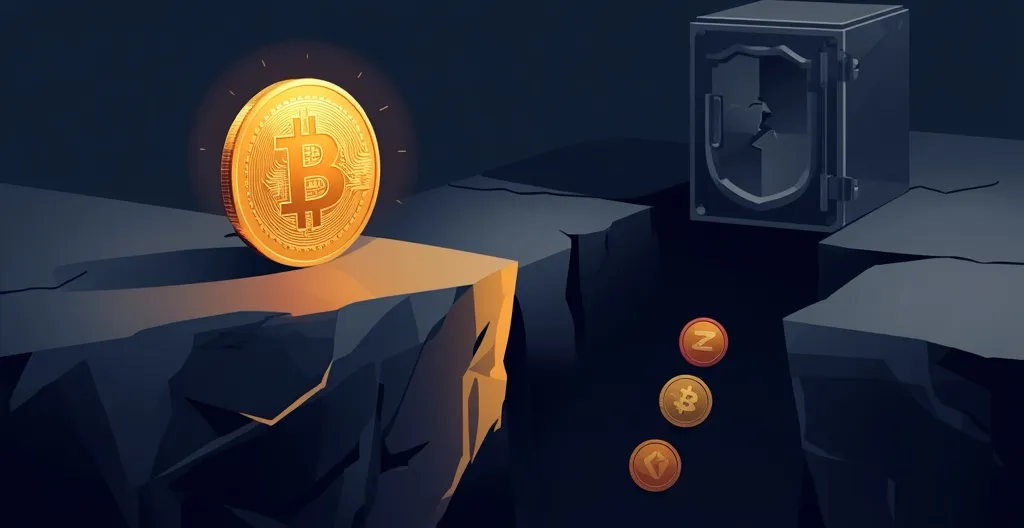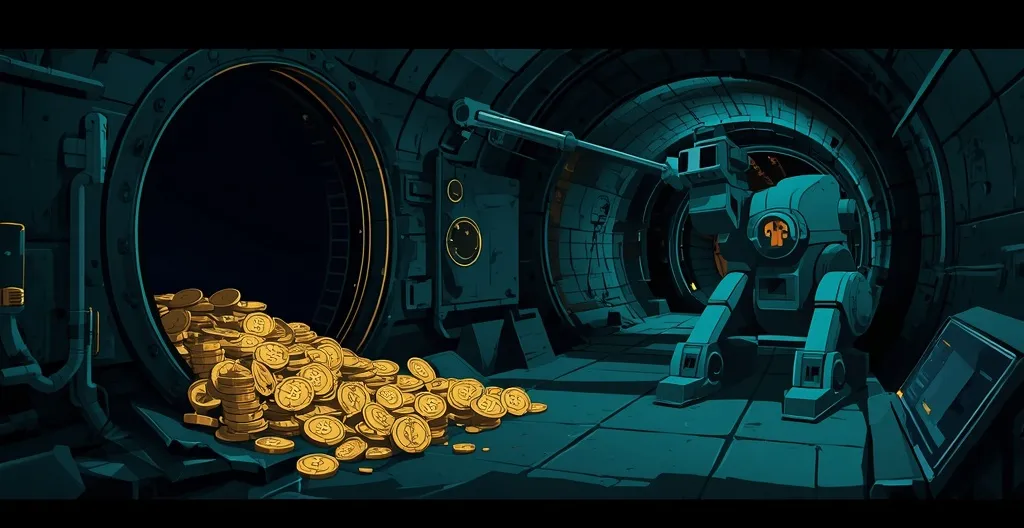

Poolin, once one of bitcoin mining’s biggest names, is now in Chapter 11 and selling its Texas mining assets through a court-run auction. The same infrastructure that once chased block rewards is now being priced for AI and high-performance computing buyers.
- Chapter 11 filed in New Jersey on July 22
- $52 million stalking-horse bid for Texas assets
- Wallet customers still waiting on frozen balances
- AI demand is lifting the value of mining infrastructure
Poolin filed for Chapter 11 bankruptcy protection in the U.S. Bankruptcy Court for the District of New Jersey, with its Singapore-based structure and U.S. subsidiaries now being used to wind down what’s left of the business. The debtors said the filing is meant to “facilitate an orderly sale of their remaining assets rather than revive the business as an operating mining company.”
That matters because Chapter 11 is not always about revival. Sometimes it’s just a court-supervised clean-up job, and that appears to be the case here.
The company’s bankruptcy paperwork estimates between 10, 001 and 25, 000 creditors, assets of $1 million to $10 million, and liabilities of $100 million to $500 million. Those balance-sheet figures do not tell the whole story, though. The Texas mining sites appear to carry strategic value well beyond the book numbers, especially now that power-connected infrastructure has become catnip for AI and data center operators, as seen in CoreWeave Joins Nasdaq 100 as AI Infrastructure Beats.
Chief Restructuring Officer Michael DuFrayne said the companies owed about $173.1 million before bankruptcy. Of that, roughly $163.7 million relates to unsecured IOUs issued to Poolin Wallet customers after withdrawals were suspended in 2022.
That wallet collapse is the ugly heart of the case. Poolin Wallet let customers borrow USDT against crypto collateral and later offered interest-bearing deposit products. When withdrawals were frozen in September 2022, customers were issued IOU tokens representing their frozen balances. Around 11, 700 users held balances above $100 when those IOUs were distributed.
In plain English: users put in crypto or used it as collateral, Poolin ran into trouble, and customers were left with claims instead of cash. That is not yield. That is a liability wearing a token-shaped mask.
The U.S. subsidiaries in the case, Lonestar Dream Inc. and Lonestar Taproot LLC, are tied to Poolin’s West Texas operations. Mining and hosting at the Pyote and Tarbush sites ended on July 10, and only a small workforce remains to secure the facilities and help with the sale process.
Those sites are now being marketed less as bitcoin mines and more as ready-made infrastructure. That’s the key point. AI and high-performance computing operators want existing electrical capacity, grid connections, cooling setup, and permitted land use because building that from scratch can take years. A former mining campus can be valuable even after the miners themselves are long gone.
Poolin signed separate asset purchase agreements with Thor CALAP LLC, with a combined stalking-horse bid of $52 million. The offer includes $15 million for the Pyote property, plus related power rights and equipment, and $37 million for the Tarbush site’s power rights and equipment. The Tarbush deal does not include the property’s surface-use agreement, which is a meaningful carve-out because land rights and power rights are not the same thing.
A stalking-horse bid is the opening bid in a bankruptcy auction. It sets the floor price and gives other buyers something to beat. Under Section 363 of the U.S. Bankruptcy Code, assets can be sold free and clear with court approval, which is why distressed companies often use this route to move property quickly and maximize what they can recover.
Before the proposed transactions, Poolin’s team spent about three months marketing the assets. Outreach went to more than 335 prospective buyers and investors, including cryptocurrency miners, artificial intelligence operators, high-performance computing operators, hyperscale data center companies, private equity firms, and real estate investment trusts. That produced 28 signed nondisclosure agreements and seven letters of intent.
The buyer list says plenty about where the money is going. Bitcoin mining still needs cheap power and serious infrastructure, but AI buyers want the same things, often with more urgency and deeper pockets. If a site already has strong interconnection and usable power capacity, it can become far more valuable than the rigs that once sat on it.
Poolin’s path to bankruptcy also reflects the wider post-China-mining-ban shakeout. The company was founded in China in 2017 by Zhibiao “Kevin” Pan, Fa Zhu, and Tianzhao Li, and by September 2019 it had reached the top position globally among bitcoin mining pools. Then China prohibited bitcoin mining in 2021, pushing miners offshore and forcing a scramble for new facilities, financing, and electricity access.
Poolin transferred customer collateral to Antalpha Technologies and borrowed roughly $213 million against cryptocurrency valued at about $355.8 million at the time. That borrowed money was used for construction of Texas mining facilities, purchases of mining machines, customer withdrawals, interest payments, and day-to-day operating expenses. In other words, the business, the customer side, and the debt spiral were all feeding each other. That setup rarely ends in a polite handshake.
Antalpha liquidated Poolin’s collateral in November 2022. At that point, management estimated debt at about $260 million and digital assets at roughly $265 million. The margin was already thin, and once the market turned, there was very little room for error.
Lonestar Dream and Lonestar Taproot have accumulated losses of approximately $45.9 million since formation, according to the filings. That helps explain why the company is not trying to restart mining operations. The goal now is to sell what still has value and stop the bleeding.
The remaining assets are slim: roughly $1.2 million in a New Jersey bank account, an office lease, and an intercompany claim. The real money, such as it is, sits in the Texas sites and the power they can still command.
Poolin Wallet users have also filed legal claims in both the United States and Singapore, which means the mess is not confined to one courtroom. The final recovery will depend on competing bids, administrative expenses, sale costs, secured claims, and court approval of a liquidation plan. For unsecured creditors, the math is usually brutal.
Poolin is not the only miner trying to squeeze value out of old bitcoin infrastructure. BitRiver faced court-supervised bankruptcy earlier this year over unpaid debts tied to power supply, data center operations, and service contracts. Ionic Digital secured SEC approval for a planned Nasdaq listing after shifting toward AI infrastructure, and part of its Texas campus is being converted from bitcoin mining to AI computing under a long-term agreement with Nscale. IREN bought Spain’s Nostrum Group in June to add about 490 megawatts of grid-connected power for AI cloud expansion across Europe, while HIVE Digital and Bitdeer have also announced mining-to-HPC conversion projects, and IREN Stock Jumps as Bitcoin Miner Pivots to AI is another loud signal that the market is rewarding this pivot. For a broader look at the economics, Bitcoin Mining Costs Soar to $70K: Toncoin and DOGEBALL shows how expensive the mining game has become.
That doesn’t mean bitcoin mining is finished. It means the value of a mining company is increasingly tied to the same real-world assets that matter to data centers: power, land, cooling, and grid access. The hash rate business built the sites; AI is now trying to inherit them. Even the distressed side of the industry is drawing attention, with Bitcoin miner Poolin enters Chapter 11 with $52M bid for highlighting how quickly these assets can move from proof-of-work to proof-of-capital.
There’s a real temptation to dress this up as efficient adaptation. Sometimes it is. Sometimes it’s just a busted business trying to sell its bones to the next buyer with a bigger budget and a more fashionable workload. Both can be true.
For Poolin, the immediate story is creditors, auctions, and courtroom arithmetic. For everyone else, the lesson is simpler: infrastructure outlasts hype, but leverage has a nasty habit of turning a once-dominant company into a fire sale with a power bill.
Key questions and takeaways
-
Why did Poolin file for Chapter 11?
To sell its remaining assets in an orderly, court-supervised process rather than revive the mining business. -
What is the $52 million bid buying?
It covers the Texas assets through separate agreements: $15 million for Pyote, including related power rights and equipment, and $37 million for Tarbush’s power rights and equipment. The Tarbush deal excludes the surface-use agreement. -
Why do AI buyers care about old bitcoin mines?
They want existing grid connections, power capacity, cooling infrastructure, and site readiness. Those can be expensive and slow to build from scratch. -
What happened to Poolin Wallet customers?
Withdrawals were suspended in September 2022, and customers received IOU tokens representing frozen balances instead of access to their funds. Roughly $163.7 million in unsecured IOUs is tied to that freeze. -
Will creditors get paid in full?
That looks unlikely given the reported asset and liability ranges. Actual recovery will depend on the auction result, sale costs, administrative expenses, secured claims, and court approval of any liquidation plan.
Poolin’s collapse is a reminder that bitcoin mining can produce digital gold, but bad leverage still melts the old-fashioned way. The difference now is that even the ruins can have value, especially if they come with a fat power connection and enough square footage to keep an AI cluster humming.