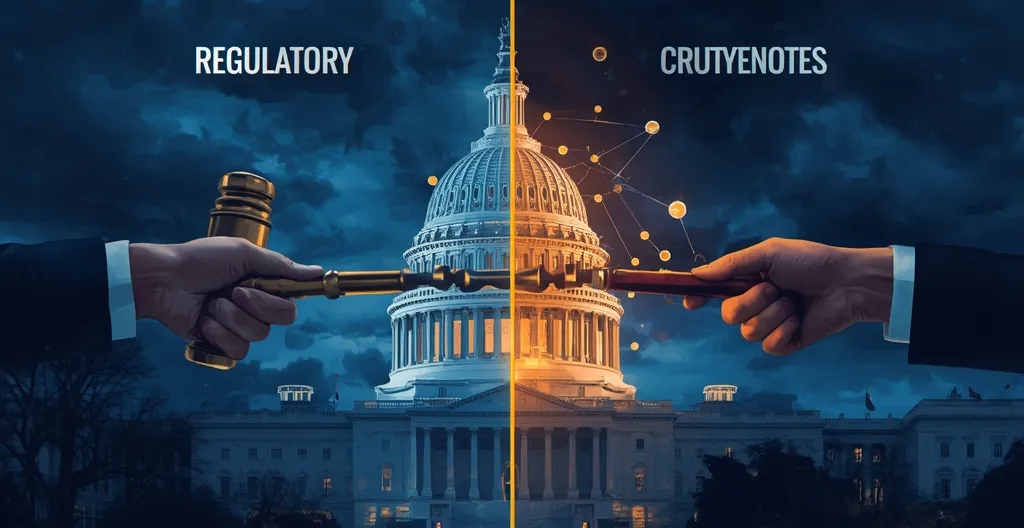

Senator Lummis warns Democrats the CLARITY Act will leave a mess if it dies
Washington’s crypto showdown has boiled down to a simple choice: pass a federal market structure framework, or keep letting the U.S. drift through regulatory fog while everyone pretends that counts as policy.
- Vote timing: A Senate procedural vote on the CLARITY Act is scheduled for September 15.
- Heavy revisions: Senator Cynthia Lummis says the latest draft includes more than 100 Democrat-requested changes.
- DeFi is the hard part: The new text would tighten rules for protocols that are not truly decentralized.
- Real stakes: The bill could shape competition between crypto exchanges, banks, and other financial firms.
The CLARITY Act is running into the oldest problem in U.S. crypto policy: everyone wants “clarity” until the wording starts threatening their preferred slice of the pie.
Senator Cynthia Lummis is now warning Democrats that if the bill fails, they will own the fallout after months of bipartisan bargaining. The latest version was released on September 10, and Lummis says it already reflects a long list of concessions made during negotiations, including more than 100 Democrat-requested changes, according to her own account.
That number matters because it frames the current fight as more than a simple party-line standoff. Lummis has also said Democrats secured 33 changes to Title I, three additional titles, 23 sections dealing with illicit finance, and more than 30 changes involving the Commodity Futures Trading Commission, or CFTC. Those are not tiny tweaks. That is a legislative rewrite with a moving target attached.
For readers who do not spend their weekends decoding congressional jargon, a title is just a major section of a bill. In plain English, the draft has already been cut up, amended, and negotiated enough to make a normal person reach for coffee, aspirin, or both.
The bigger issue is not whether crypto should be regulated. That ship has long since sailed. The real fight is over what kind of federal framework should exist, who should supervise it, and how much room the rules should leave for open networks versus centrally run businesses.
The latest draft reportedly tries to draw a clearer line around decentralized finance, or DeFi. DeFi refers to financial services built on blockchain systems that can operate without the usual banks, brokers, or custodians in the middle. That sounds elegant on a whiteboard and turns into a headache the second regulators ask who is actually responsible when something goes sideways.
According to the draft language described in the notes, protocols that are not genuinely decentralized would have to register with the CFTC and comply with Bank Secrecy Act requirements. The Bank Secrecy Act is the U.S. anti-money-laundering and recordkeeping regime that banks, exchanges, and other financial firms already know well. In other words, if a protocol behaves like a controlled financial business instead of a truly decentralized network, the bill appears to want it treated like one.
The newer text also narrows some DeFi provisions to spot and cash digital commodity transactions. Spot transactions are simple: you buy or sell an asset for immediate settlement, not a futures contract or some other derivative. That may sound like legal housekeeping, but in crypto, legal housekeeping is where careers go to die and compliance teams earn their keep.
Democratic critics still have objections, especially around ethics and anti-money-laundering protections. Those concerns are not frivolous. Crypto has had more than enough scandals to justify skepticism, and anyone claiming the sector can self-police on vibes alone is either lying or selling something.
But the opposing argument is just as real: unclear rules are not consumer protection. They are uncertainty dressed up as prudence. When the rules are vague, the biggest firms can afford the lawyers, smaller builders get squeezed, and serious institutions sit on the sidelines waiting for someone in Washington to stop freelancing with enforcement actions.
That is why market structure legislation keeps coming back. A federal framework can define which agency oversees what, what disclosures are required, and which activities need registration. Without that, the market stays stuck in the same patchwork system where regulators argue, firms guess, and consumers get handed the bill for everybody else’s indecision.
Banking groups are also paying close attention. They have raised concerns about the effect crypto and stablecoin products could have on traditional bank deposits. That is not a random talking point. Deposits are the raw fuel of banking, and if users move more value into stablecoins or crypto payment rails, banks lose funding and some control over payments activity. Naturally, the lobbyists are not thrilled.
At the same time, clearer rules could open the door for banks and large financial institutions to offer crypto services more aggressively. That cuts both ways for established exchanges. A framework like the CLARITY Act could help a platform such as Coinbase by legitimizing the market it already operates in, but it could also invite banks, brokerages, and big fintech firms to compete more directly on custody, trading, and payments.
An X user, Vincent Van Code, argued that a failure of the CLARITY Act would mainly benefit incumbent exchanges like Coinbase by slowing bank entry into crypto services. That is a plausible theory, but still just a theory. If the bill dies, the incumbents may keep their edge for a while. If it passes, some of those same incumbents may suddenly have to deal with much nastier competition.
Lummis made her position even sharper in a September 12 post, warning that if the CLARITY Act fails, Democrats will be blamed for wasting months of bipartisan work and leaving consumers with zero federal protection, no disclosure rules, and no delisting requirements for bad actors.
“If the Clarity Act fails, Democrats own what comes next: more 100 Democratic-directed changes wasted, consumers with zero federal protection, no disclosure rules, no delisting requirements for bad actors, stuck in the same unregulated system that has already cost Americans…”
That is classic legislative pressure: support the bill or own the wreckage. It is political hardball, sure, but it also reflects a real frustration in crypto policy. The U.S. keeps talking about protecting consumers while leaving the industry in a gray zone that benefits the loudest lawyers and the worst actors far more than it helps ordinary users.
If the CLARITY Act advances, it will not magically erase fraud, market blowups, or the messiest corners of DeFi. No bill can do that. But it could set a baseline for how exchanges, banks, stablecoin firms, and decentralized protocols are treated under federal law. That would be a meaningful step, even if it is not a glamorous one.
If it fails, the U.S. stays with the same broken arrangement: fragmented oversight, endless uncertainty, and plenty of room for regulatory theater. That is bad for builders, bad for responsible companies, and bad for users who just want to know which rules apply before the next enforcement swing lands.
Key takeaways
-
What is the CLARITY Act trying to do?
It aims to create a federal crypto market structure by setting rules for oversight, registration, disclosures, and the treatment of different digital-asset activities. -
Why is DeFi such a headache for regulators?
DeFi protocols often do not have a normal company structure or a clear central operator, which makes traditional compliance models awkward and enforcement harder. -
Why are banks worried about this bill?
Clearer crypto rules could make it easier for banks to enter the market, while stablecoins and crypto payment rails could also pull activity away from traditional deposits. -
Could the bill help exchanges like Coinbase?
Yes, clearer rules could strengthen established exchanges by legitimizing the market, but the same clarity could also bring much heavier competition from banks and big financial firms. -
What happens if the bill fails?
The current patchwork likely continues, which means more uncertainty, more agency turf wars, and fewer clear federal rules for consumers and firms.
That is the ugly truth here: both sides say they want protection, fairness, and stability, but the fight is really over who gets to write the rules and who gets exposed when the market finally grows up.
Further reading
A few extra references for tracking the CLARITY Act pileup and the broader crypto policy mess in Washington.
- Senator Blunt Rochester’s official Senate page
- How to Renew Your Vehicle Registration in Texas
- Congress.gov legislation search
- 119th Congress digital asset bill text
- Clarifying the CLARITY Act: What to Know
- CLARITY Act passes Senate committee
- Senate Republicans may push DeFi under CFTC oversight in CLARITY Act revision
- CLARITY Act faces CFTC staffing gaps and DeFi uncertainty