A reported Senate vote date of September 15, 2026 for the CLARITY Act is unverified, so the timing should be treated with caution. What is clear is that the Digital Asset Market Clarity Act (H.R. 3633) is real, active, and still tangled in the same old U.S. crypto mess: who regulates what, and how far Congress wants to go in cleaning up the chaos.
- Vote date: September 15, 2026 is not confirmed by the available material
- Bill focus: crypto market structure, token classification, and regulatory authority
- Main friction: SEC scope, banking objections, and law-enforcement carveouts
The CLARITY Act is aimed at one of the ugliest policy problems in U.S. crypto: the endless dispute over whether a token is a security, a commodity, or something else entirely. That question has left builders guessing, lawyers billing by the hour, and regulators acting like they can improvise the rules after the fact. Not exactly a masterpiece of governance.
According to the bill text and related reporting, Senate Republicans released an updated 616-page version on July 22, 2026. The revised text reportedly deals with a “mature blockchain system”, post-maturity disclosures, intermediary registration, SEC rulemaking, and exemptions from certain registration requirements.
In plain English, the bill appears to try to draw a line between early-stage digital assets and networks that have become decentralized enough to deserve different treatment. That distinction matters. A network with a single controlling issuer is not the same beast as a widely distributed system with no obvious central boss. Congress is trying to codify that difference instead of leaving everyone to fight it out in court.
The phrase “mature blockchain system” sounds neat, but the idea is still politically and legally messy. Based on the bill text described in the research, the concept appears to hinge on a blockchain reaching a statutory threshold that changes how it is treated under securities law. The exact practical test is what everyone will fight over, because if the bar is too low, bad actors will game it; if it is too high, the framework becomes another bureaucratic brick wall.
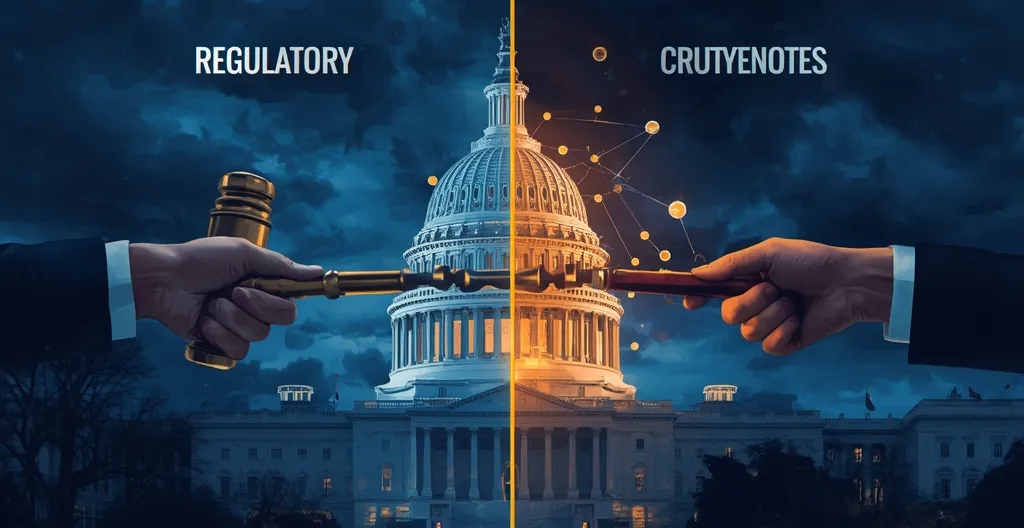
The headline’s reference to “regulatory concerns” is accurate, but vague. The real disputes are more specific:
- Regulatory authority: who gets to police digital assets, and how much power the SEC keeps
- Market structure: what rules exchanges, intermediaries, and issuers have to follow
- Banking and lending: whether the bill affects local lending or stablecoin-related rewards
- Law enforcement: whether the text leaves room to pursue illegal conduct involving digital assets
That is the part many people miss. This is not just “crypto vs. the government.” It is a much dirtier fight involving Congress, the SEC, banks, law enforcement groups, and the White House. Everybody wants clarity. Everybody also wants the rules written in a way that favors their side. Funny how that works.
One notable development is that the Fraternal Order of Police reportedly reversed earlier opposition after revised language clarified that law enforcement would not lose the ability to deal with unlawful conduct involving digital assets. That matters because crypto legislation often gets bogged down by a simple fear: that protecting innovation will accidentally create a shield for criminals. If the revised language addressed that concern, it likely helped the bill’s political prospects.
The banking pushback is also worth taking seriously. Banking trade associations reportedly argued that the bill still threatens local lending and raised concerns tied to rewards connected with holding payment stablecoins. For readers unfamiliar with the term, payment stablecoins are digital tokens designed to hold a stable value, usually by being tied to a reserve asset such as the U.S. dollar.
Banks worry that rules around stablecoins, rewards, and digital asset flows could blur the line between deposits, lending, and bank-like activity. In other words, if people can park money in crypto products that behave too much like savings accounts, banks do not just lose customers, they lose control of part of the financial plumbing. That complaint may be self-serving, but it is not nonsense.
The timing, however, remains the biggest unresolved point. The available material does not confirm a Senate vote on September 15, 2026. What it does show is that the schedule was fluid in late July 2026. Senate Majority Leader John Thune reportedly cast doubt on passing the bill before the August recess, while White House crypto adviser Patrick Witt still saw the first week of August as a possible window.
That is not a firm vote date. That is a political tug-of-war with a calendar attached. Anyone treating September 15 as settled fact is running ahead of the evidence.
If the CLARITY Act or a revised version eventually passes, the upside is obvious. A clearer statutory framework could give legitimate projects a path to know when a blockchain is considered mature, how disclosures work, and which entities must register. That could reduce the regulatory whiplash that has driven so much crypto development offshore and turned U.S. compliance into a casino with paperwork.
For builders, that kind of clarity would be a real win. For exchanges, it could mean more predictable listing and registration rules. For investors, it could mean fewer surprise enforcement actions after the fact. And for the U.S. more broadly, it could help keep open-source financial infrastructure from being slowly strangled by ambiguity.
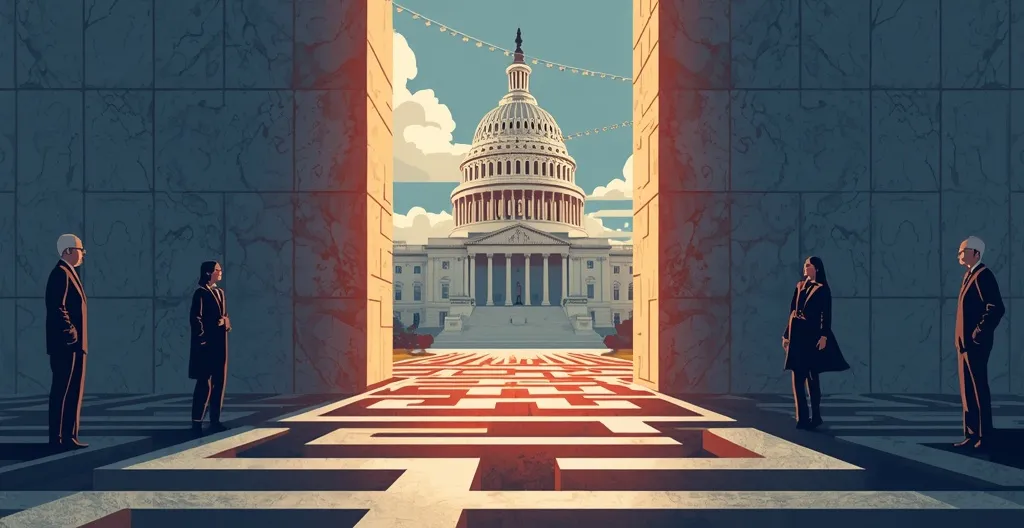
But there is a devil’s-advocate case too. Congress can absolutely turn a promising framework into a compliance labyrinth if it gets too cute with definitions and exemptions. If “mature blockchain system” becomes too easy to claim, fraudsters will exploit it. If it is too hard to qualify, the whole thing becomes another regulatory maze with fresh paint on the walls.
That’s the real tension here: clarity should not become a euphemism for sloppy leniency. A serious crypto framework needs to separate decentralized networks from issuer-controlled schemes without handing out free passes to grifters. If the bill does that, it could be a meaningful step forward. If it doesn’t, it will just be another Washington document that sounds bold and works badly.
The broader fight is still the same one crypto has been having for years in the United States: do lawmakers want a rules-based system that lets decentralized networks mature, or do they want to keep using enforcement pressure and vague guidance as the default operating model? The second option has been a disaster. It punishes builders, rewards lawyers, and leaves the market guessing.
The CLARITY Act matters because it is trying to answer that question in statute rather than through endless regulator theater. That is the right instinct. Whether Congress can actually write decent law instead of a fresh pile of regulatory sludge is another matter entirely.
For a closer look at the legislative text itself, see the Failed to extract title page on Congress.gov, and for a plain-language breakdown of the bill’s scope, the CRS summary An Overview of H.R. 3633, the CLARITY Act is a useful reference.
It is also worth tracking how the bill has evolved politically. The updated Senate text and committee maneuvering are covered in Senators Release Updated Clarity Act Text, while the broader legislative path through the Senate Banking Committee has already been mapped in Senate Banking Committee Advances Crypto Market Clarity Act.
And yes, the stablecoin angle remains a thorny side quest. The draft’s treatment of yield and rewards has already sparked criticism, as covered in U.S. Stablecoin Yield Ban Advances in Digital Asset Market. If Congress keeps trying to micromanage the business model while pretending it is only “clarifying” anything, that’s how you end up with legislation that pleases nobody except lobbyists and paper-pushers.
There is also a more urgent political warning embedded in this mess. As Lummis Warns Clarity Act Must Pass Now or U.S. Crypto Rules argues, delaying a clean framework could mean years more of drift, uncertainty, and regulatory gamesmanship. That is not a small issue. In crypto, years of indecision can mean entire industries get built elsewhere while Washington schedules another hearing and pats itself on the back.
Key questions and takeaways
-
Is the September 15, 2026 Senate vote date confirmed?
No. The available material does not verify that date, and the stronger timing signals point to uncertainty around July and early August 2026 discussions instead. -
What is the CLARITY Act trying to do?
It is trying to create a clearer legal framework for digital assets, especially around token classification, decentralized networks, intermediaries, and when a blockchain is considered mature. -
Why are regulators and other groups concerned?
The disputes center on SEC authority, securities-law treatment, market structure rules, law-enforcement carveouts, and possible effects on lending and stablecoin-related products. -
Who could benefit if the bill passes?
Builders, compliant exchanges, and investors could all gain from clearer rules. The U.S. crypto sector in general could get a less hostile and less arbitrary operating environment. -
Could the bill also go wrong?
Yes. If the definitions are sloppy, it could create loopholes for bad actors or a new compliance maze that does little to solve the underlying confusion. -
Does this automatically favor Bitcoin and crypto?
Not automatically. Better rules can help the sector, but the details matter more than the branding. Bad legislation wrapped in “clarity” language is still bad legislation.
The CLARITY Act fight is really a fight over whether the U.S. wants actual digital asset policy or just more regulatory improv with a congressional label slapped on top. Crypto does not need more theater. It needs rules that are clear, enforceable, and hard enough on scammers that they cannot slither through the cracks.
For more on the vote timing claim, Reuters’ reporting on the delay is here: Error extracting content. If you want the most recent push from Sen. Cynthia Lummis, her office’s release is available in Lummis Releases Updated Clarity Act Text.