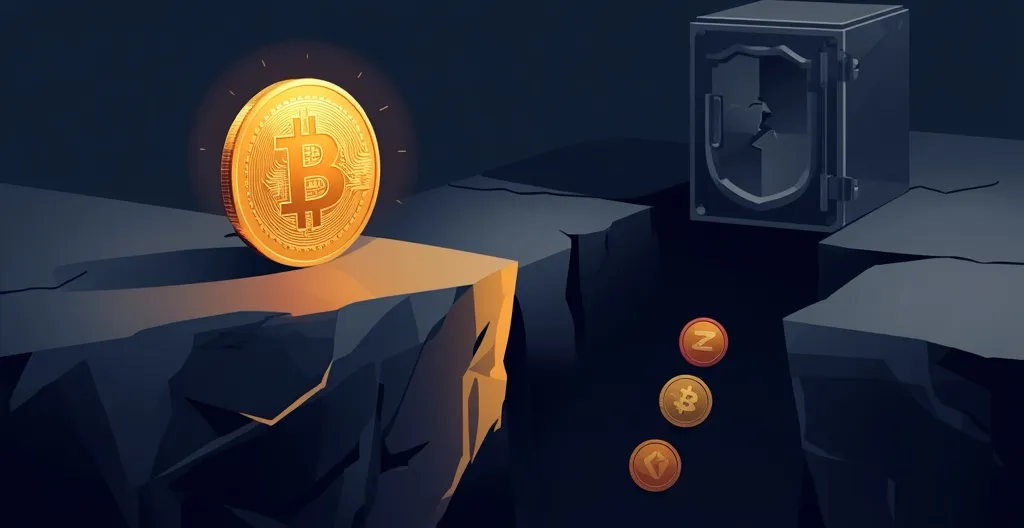

Iran is reportedly using crypto to settle export payments as sanctions keep choking off normal banking channels. The workaround is real, but so are the traps. Stablecoins can be frozen, exchanges can be sanctioned, and U.S. pressure does not vanish just because a payment touched a blockchain.
- USDT is the main rail
- Crypto use appears tolerated, not fully legalized
- Sanctions risk still follows the money
- Stablecoins help and also hand issuers a kill switch
The Financial Times reported on Sept. 9 that Iranian businesses are using USDT, Bitcoin, and other digital assets to receive cross-border export payments in Iran turns to crypto for export payments amid sanctions: FT. The report says Iran’s central bank has eased foreign-exchange controls and is tolerating crypto use as exporters look for ways around banking rails constrained by U.S. sanctions.
That is the core of it. Crypto is being used as plumbing, not as a philosophy seminar. For sanctioned or semi-isolated economies, that matters. If banks will not clear the transfer, people will look for a rail that still works.
“Receiving export payments in crypto has now become completely normalized, ” an executive at a government-linked company told the FT.
That sounds like a clean policy shift. It probably is not.
What appears to be happening is more pragmatic, and messier: a tolerance shift, not a neatly published legal regime. Publicly available guidance does not appear to spell out a broad, formal authorization for every exporter. In other words, this looks less like “crypto is now officially the law” and more like “we’re letting this slide because the old channels are broken.”
The distinction matters. A tolerated workaround can be useful, but it is also fragile. One policy memo, one enforcement action, or one political decision can tighten the screws again.
Iranian exporters may reportedly repatriate overseas funds through domestic cryptocurrency exchanges, convert foreign currency through open markets, or use export revenue directly to purchase imports. That is not some grand crypto utopia. It is a country trying to keep trade moving while the banking system remains boxed in.
And yes, this is exactly the kind of use case crypto was built for. Permissionless settlement, fewer gatekeepers, no correspondent bank begging for a compliance form in triplicate. The pitch writes itself.
But the reality check comes fast.
The U.S. Treasury treats Iranian digital asset exchanges as Iranian financial institutions whose property must be blocked when under U.S. jurisdiction. OFAC, the Treasury’s sanctions office, says U.S. persons generally cannot transact with Iranian crypto exchanges unless an exemption or authorization applies. It also warns that non-U.S. financial institutions and other foreign persons can face secondary sanctions, penalties that can hit foreign parties, not just Americans, if they materially support designated Iranian exchanges or facilitate transactions on their behalf.
So no, this is not a neat sanctions loophole. It is a pressure cooker. Crypto can move value across borders, but sanctions enforcement can still hit the exchanges, the liquidity providers, the counterparties, and the issuer if the asset is centralized enough to freeze.
The scale of the problem helps explain why Iran is bothering. The Financial Times cited figures suggesting more than 20, 000 individuals and companies have failed to repatriate roughly €94 billion. That figure reflects a much broader export-proceeds problem, not a crypto-specific number. It is about trapped money, not just on-chain money.
TRM Labs put some numbers around the digital side of the picture. The firm attributed about $9.9 billion in cryptocurrency volume to Iran during 2025, down from roughly $11.4 billion in 2024. TRM’s reporting measured incoming and outgoing transactions linked to Iranian services and entities, so this is an estimate of attributed activity, not a complete census of every Iranian crypto transfer.
Still, the volume suggests structural demand. That is the part worth paying attention to. If you live under sanctions, a dollar-pegged stablecoin is not a meme toy. It is a workaround for a busted banking relationship.
USDT is reportedly the preferred tool because it gives users exposure to the U.S. dollar without requiring access to a dollar-denominated bank account. That is exactly why stablecoins have become so important in places where the formal financial system is unavailable, expensive, or politically hostile.
Tron is often used for USDT transfers because fees are relatively low. That boring little detail matters a lot in real-world trade. People paying for goods do not care about blockchain tribalism; they care about cost, speed, and whether the payment clears.
But the trade-off is obvious. USDT is centralized. Tether can freeze tokens at the address level, which makes stablecoins useful for settlement and dangerous for anyone trying to outrun enforcement.
In April, Tether froze about $344 million in USDT held across two Tron addresses linked by U.S. authorities to Iranian state and military networks. Prior reporting connected those funds to Iran’s IRGC, the Islamic Revolutionary Guard Corps. That freeze is a blunt reminder that “crypto” does not automatically mean “uncensorable.”
Bitcoin sits in a different bucket. It has no issuer that can simply lock your coins, which is part of why it remains politically interesting and strategically valuable. But Bitcoin is still transparent on-chain, and the ecosystem has plenty of choke points at exchanges, brokers, and payment services. Harder to freeze at the protocol level does not mean impossible to pressure in practice.
Iran has also been part of Cryptocurrency in Iran for years. Elliptic estimated in 2021 that Iran accounted for about 4.5% of global Bitcoin mining. That is a historical estimate, not a confirmed 2026 share, but it shows the country has not been standing outside the crypto economy. It has been using it from multiple angles, mining, settlement, and sanctions workarounds.
The larger point is simple: crypto can reduce dependence on hostile banking rails, but it does not make a country invisible. Blockchain transfers can be traced. Exchanges can be sanctioned. Stablecoins can be frozen. Foreign firms can be threatened with secondary sanctions. That is a lot of ways to jam the gears.
So the reported Iranian shift should be understood as partial relief, not a clean escape hatch. It may help exporters move value. It may help officials claw back overseas proceeds. It may also deepen compliance risk and keep the pressure on anyone doing business with Iranian-linked counterparties.
The unresolved question is still the important one: is this a formal policy shift, or just tolerated behavior dressed up as normalization? So far, the reporting points more toward the latter. Until Iran’s central bank publicly confirms the rules, spells out settlement channels, or licenses specific routes for exporters, this remains a practical workaround, not a settled legal framework.
For more context on the geopolitical backdrop, see Europe Delays Iran UN Sanctions: Nuclear Talks and Crypto’s, which shows how sanctions pressure keeps shaping the same financial escape routes.
Key questions and takeaways
-
Is Iran officially authorizing crypto for export payments?
Not clearly, at least not in a publicly documented way. The reporting points to tolerated use and easier enforcement, not a fully codified legal regime for all exporters. -
Which crypto is being used most?
USDT appears to be the main rail because it tracks the dollar and moves cheaply, especially on Tron. -
Does crypto let Iran bypass sanctions cleanly?
No. U.S. sanctions still apply, OFAC can target exchanges and counterparties, and Tether can freeze tokens linked to sanctioned activity. -
Why not just use Bitcoin?
Bitcoin is harder to censor at the protocol level, but it is more volatile and less convenient for trade settlement than a dollar-pegged stablecoin. -
How large is Iran’s attributed crypto activity?
TRM Labs attributed about $9.9 billion in cryptocurrency volume to Iran in 2025. That is meaningful, but still only a slice of the country’s broader trade and financing needs. -
What is the biggest unanswered question?
Whether Iran will turn this from informal tolerance into a formal framework with published rules and licensed channels. That is the difference between a workaround and a policy.
For another angle on how Washington is tightening the screws, see US Cracks Down on Iran’s Crypto Channels as Tehran Uses.
And if you want the specific angle on shipping and settlement pressure, Iran’s Strait of Hormuz Shipping Plan Fuels Bitcoin, USDT connects the dots between logistics, sanctions, and the markets.
The blunt takeaway: crypto is useful, but it is not magic. For sanctioned economies, it can keep trade alive when banks are off-limits. For regulators, it opens a new enforcement front. And for stablecoin issuers, it is a reminder that the power to freeze tokens is also the power to govern them.
Further reading
A couple of useful follow-ups for the sanctions, settlement, and crypto plumbing side of this mess: