El Salvador’s Bitcoin experiment is still alive, still controversial, and now squarely inside the country’s 2027 election fight.
- Bitcoin holdings keep rising: Public trackers show El Salvador at about 7, 725 BTC as of July 27.
- Politics are catching up: Opposition candidates are attacking Bukele’s Bitcoin policy ahead of the 2027 vote.
- The IMF deal changed the rules: Bitcoin is no longer mandatory for businesses, while the dollar remains the required currency for everyday transactions.
- Markets are shaky too: Bitcoin’s price action is weak enough that traders are watching major support levels.
BitcoinTreasuries.net lists El Salvador at ₿7, 725 as of Jul 27, 2026, worth roughly $496.9 million. The country that became the first to adopt Bitcoin as legal tender in September 2021 is still accumulating, and the policy has long since moved from novelty to political baggage.
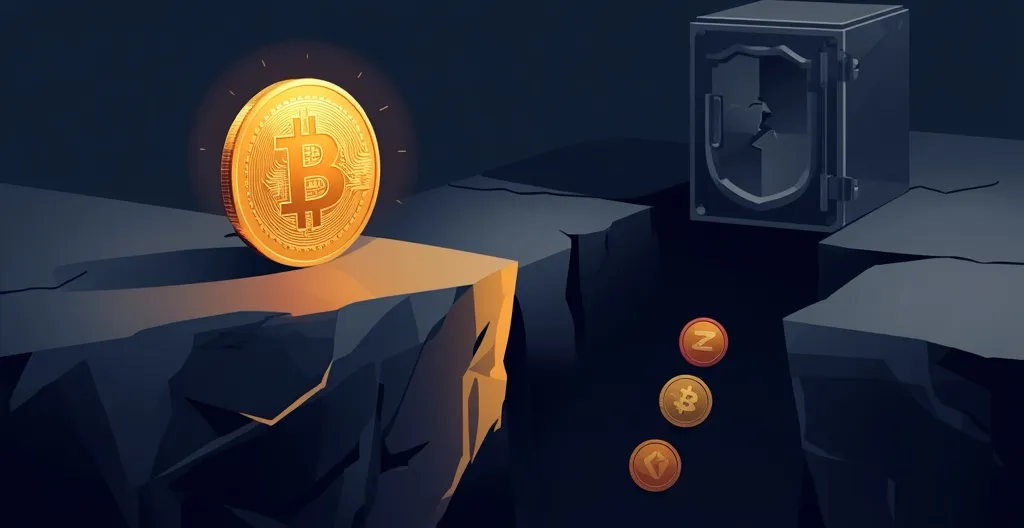
That matters because the debate is no longer just about whether Bitcoin belongs on a sovereign balance sheet. It is about whether a government can keep buying an asset as volatile as BTC when opponents are calling the strategy a fiscal mess and voters are being asked to live with the consequences.
The National Bitcoin Office remains the face of that strategy, and public reporting indicates the country is still adding to its stack at a steady pace. Exact daily purchase cadence can be hard to verify in real time, but the overall trend is clear enough: the balance keeps climbing.
For supporters, that still makes El Salvador the most important live test of state-level Bitcoin accumulation. For critics, it is a long-running reminder that a flashy monetary experiment is not the same thing as a working public policy. Both camps have a point. That is the annoying part, and also the useful part.
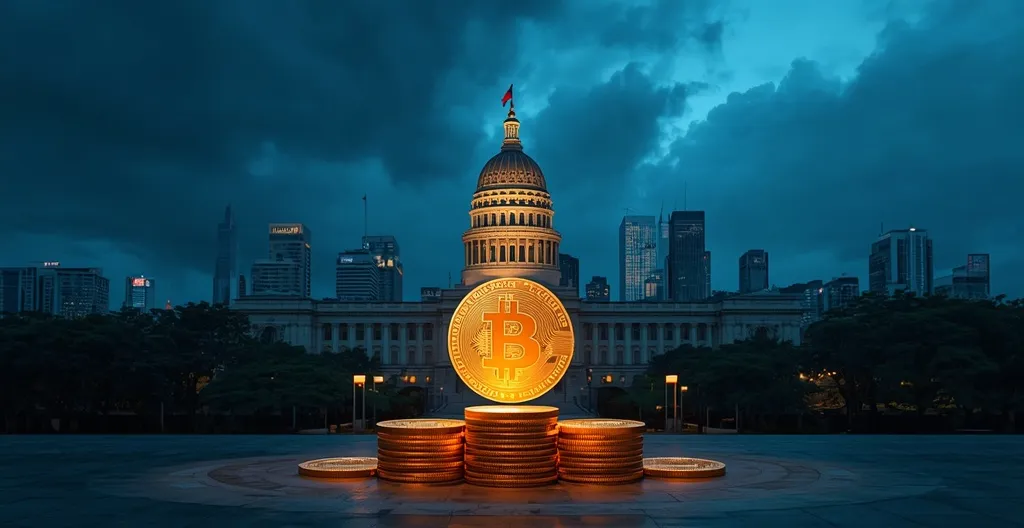
The political heat is rising because Bitcoin is now part of the campaign conversation ahead of the February 2027 presidential election. According to the reporting summarized here, the Nationalist Republican Alliance, or ARENA, selected former lawmaker Maytee Iraheta, while the Farabundo Marti National Liberation Front (FMLN) nominated Rafael Aguirre, a physician and union leader. Both have criticized Bukele’s Bitcoin policy as a fiscal failure.
That framing is politically potent because it shifts the argument away from ideology and into budget reality. Bitcoin as a symbol is easy to sell. Bitcoin as a line item invites harder questions: What did it cost? What did it deliver? And who, exactly, is supposed to eat the risk if the bet goes sideways?
President Nayib Bukele has been in office for six years and remains broadly popular, which is precisely why this policy fight matters. High approval can cover a lot, but it does not erase the basic issue. A government can survive a controversial experiment for a long time and still leave behind a bill someone else has to explain later.
The legal structure around Bitcoin has also changed in a meaningful way. After the $1.4 billion IMF loan agreement in February 2025, the government removed the legal requirement for businesses to accept Bitcoin. That left the U.S. dollar as the only mandatory currency for everyday transactions, while Bitcoin remained usable rather than compulsory.
That distinction matters. It means El Salvador did not abandon Bitcoin, but it did walk back the most aggressive part of the original rollout. The early pitch in 2021 was bold: modernize the economy, attract investment, and broaden access for people outside the banking system. The current setup is more restrained, and frankly more realistic.
The IMF relationship is not a clean anti-Bitcoin-versus-pro-Bitcoin morality play either. The Fund has warned about fiscal and governance risks tied to the strategy, and it has said the Bitcoin push has not significantly improved financial inclusion for unbanked citizens. In plain English, that means the IMF is skeptical that Bitcoin has done much to bring more people into practical day-to-day financial access through accounts, payments, savings, and remittances.
At the same time, the IMF’s First Deputy Managing Director praised El Salvador’s economic achievements and said both sides were making “solid progress” on upcoming program reviews. That does not mean the IMF suddenly became a Bitcoin fan club. It means the relationship is more complicated than the usual online shouting match, which is a low bar but still worth noting.
El Salvador also increased its gold reserves in January, which suggests the government is thinking in broader reserve-management terms rather than treating Bitcoin as its only financial identity. That is a sensible hedge if true. Governments that bet everything on one shiny thesis tend to get humbled by reality, and reality has an ugly habit of showing up uninvited.
Bitcoin’s own market setup adds another layer of pressure. During the final week of July, BTC is trading below its 200-day EMA, a long-term trend gauge traders use to judge whether price is generally healthy or weak. When price sits below that line, sentiment usually gets cautious fast.
One market reference places $60, 730 as an important support zone. If that level holds, Bitcoin could target $73, 696 in August. If support breaks, a drop toward $48, 798 comes into view. Those are technical levels, not destiny. Chart traders can draw clean lines all day; the market remains under no obligation to behave like a geometry worksheet.
Still, the overlap between political uncertainty and weak price structure is real. If Bitcoin rallies, Bukele’s allies can point to the stack and call it foresight. If Bitcoin slides, critics will have fresh ammunition and louder headlines. Either way, the price chart is now part of the political narrative whether anyone wants it there or not.
The bigger lesson is not complicated. Sovereign Bitcoin policy does not exist in a vacuum. It has to survive elections, lender scrutiny, public skepticism, and market volatility all at once. That is a much harder test than posting laser eyes and calling it monetary revolution.
El Salvador remains one of the most important Bitcoin experiments on earth. It also exposes the uncomfortable side that the cheerleaders often skip over: adoption does not magically cancel political risk, fiscal tradeoffs, or the need to prove actual usefulness. The chain may be decentralized. The consequences are not.
Key questions and takeaways
-
How much Bitcoin does El Salvador hold?
Public trackers list the country at about 7, 725 BTC as of July 27, making it one of the most closely watched sovereign Bitcoin holders in the world. -
Is El Salvador still buying Bitcoin?
Yes. Reporting indicates the National Bitcoin Office is still accumulating, with the government continuing to add to its holdings over time. -
Why is Bitcoin becoming a campaign issue?
Opposition candidates are using it to attack Bukele’s economic judgment ahead of the 2027 presidential election. Once Bitcoin becomes a voting issue, it stops being just a branding exercise and starts looking like a policy liability. -
Did the IMF deal change Bitcoin policy?
Yes. After the February 2025 IMF loan agreement, the government removed the legal requirement for businesses to accept Bitcoin. The dollar remains the only mandatory currency for everyday transactions, while Bitcoin can still be used voluntarily. -
Has Bitcoin improved financial inclusion in El Salvador?
The IMF says it has not significantly improved financial inclusion for unbanked citizens. Critics argue that real inclusion takes more than a Bitcoin app; supporters say the experiment is still young and should be judged over a longer horizon. -
What does Bitcoin’s price setup look like right now?
Cautious. BTC is below its 200-day EMA, and traders are watching $60, 730 as support. If that level fails, downside risk grows; if it holds, the chart can improve quickly.
Further reading
A few useful context pieces on El Salvador’s Bitcoin gamble and the political baggage now hanging off it:
- El Salvador Bitcoin Strategy Faces 2027 Election Test
- IMF selected issues paper on El Salvador
- Reuters report on opposition candidates for the 2027 race
- Bitcoin in El Salvador
- BTI 2026 El Salvador Country Report
- El Salvador Adds 13 BTC to Reserves Amid IMF Loan Talks
- El Salvador Scales Back Bitcoin Use in $1.4B IMF Loan
- El Salvador Buys 1, 090 Bitcoin for $101M Amid Market Crash