Solana is getting a real institutional boost from Japan while the market still treats SOL like a punchy trading token. That tension is the point: serious adoption is arriving, but the chain still has to live with volatility, bridge risk, and the usual crypto nonsense.
- SBI Holdings is using Solana for tokenization and yen stablecoin plans.
- WSOP is bringing Solana into crypto payments and settlement.
- Bridge security remains one of crypto’s weakest links.
- SOL’s price structure still looks more tactical than triumphant.
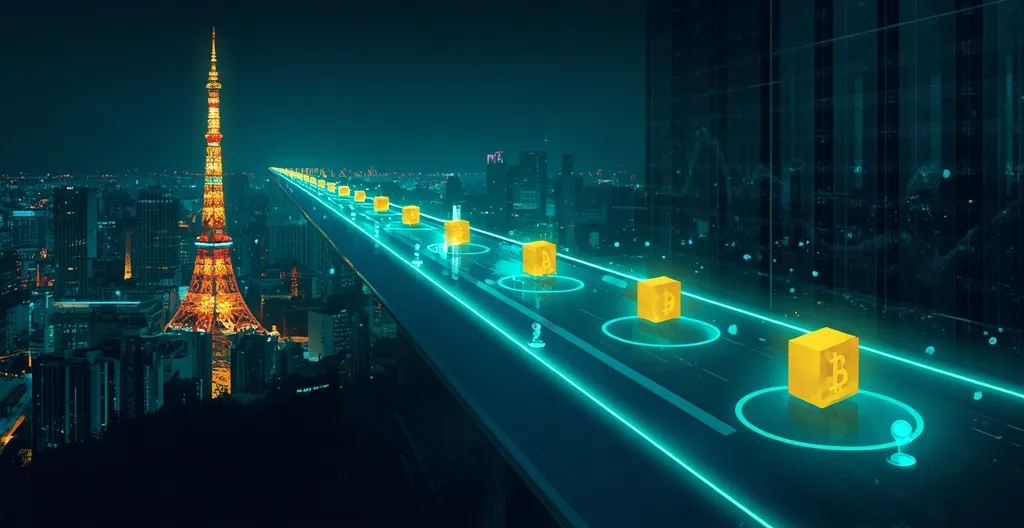
The clearest signal here is SBI Holdings’ move with the Solana Foundation. According to the materials provided, the two are working on an institutional on-chain financial market in Japan, with a focus on stablecoins, tokenized real-world assets, and cross-border settlement. That includes a yen-backed stablecoin effort and tokenization of instruments such as corporate bonds, commercial paper, investment funds, and real estate.
That is not the kind of announcement you make if you think blockchain is just for ape JPEGs and midwit trading charts. Tokenization, in plain English, means taking a real-world asset and representing it as a blockchain token that can be transferred or settled more efficiently than the traditional paperwork stack from hell. Stablecoins are the cash-like part of that system: digital tokens designed to track fiat currencies such as the yen or the dollar.
The key distinction is that SBI is not just dabbling in crypto optics. It is building around regulated finance workflows. That is where Solana’s pitch starts to make sense: high throughput, low fees, and predictable execution for systems that need to move value fast without falling apart when real money shows up.
SBI’s move is a serious institutional signal
Japan’s financial sector has not exactly been known for reckless blockchain theater. When a major financial group leans into a chain for tokenization and stablecoin infrastructure, that is a more meaningful endorsement than a dozen “partnership” press releases padded with buzzwords and zero substance.
According to the research notes, the Solana Foundation will also purchase an equity share in SBI R3 Japan, which may be renamed SBI Solana Global. That detail matters because it suggests the relationship is not a one-off marketing handshake. It looks more like an attempt to build lasting infrastructure around regulated digital finance.
For readers new to the term, RWA tokenization means putting real-world assets on-chain as tokenized instruments. In practice, that could help with ownership transfer, settlement, collateral workflows, and other financial plumbing that legacy systems still handle with far too much friction. Crypto has a bad habit of turning every use case into a speculative circus. This one is closer to the boring, necessary stuff that actually changes how finance works.
That does not mean instant mass adoption. It means Solana is being evaluated for something that institutions care about: compliance, reliability, and scale. In other words, the chain is being asked to do adult work.
SBI’s broader tokenization pivot has already drawn attention from market watchers, including coverage of what Japan's tokenization pivot means for Solana and the company’s earlier push to adopt Solana for yen stablecoin plans. This is not a stray headline in a vacuum; it is part of a bigger institutional experiment that still needs to prove it can survive contact with reality.
WSOP gives Solana a visible payments use case
WSOP’s own announcement adds a very different kind of validation. The World Series of Poker said it will bring crypto purchases through Solana-powered infrastructure, with the Solana Foundation serving as the official Presenting Sponsor of the 2026 World Series of Poker and 2026 WSOP Paradise.
According to WSOP, this is the first time in WSOP history that players can purchase tournament tickets directly with cryptocurrency. The payment flow will have zero processing fees, and winners at 2026 WSOP Paradise in The Bahamas will be able to receive settlements in stablecoins on Solana.
That is more than a logo on a banner. It puts Solana into a live consumer environment where people need fast settlement, low friction, and a network that does not choke when the event calendar gets busy. Poker players are a pretty unforgiving audience. They tend to notice bad rails and dumb fees quickly, because those are just taxes with a better PR team.
WSOP also helps frame Solana as a practical commerce rail, not just a speculative asset. The chain is being used for payment and settlement workflows where speed and cost matter. That is the kind of use case crypto has spent years promising and far too often failing to deliver outside its own echo chamber.
There is also a broader tokenization angle worth watching. Solana has been showing up in a growing set of real-world asset experiments, from private equity tokenization with Tessera to Republic and Animoca Brands’ tokenized AB1 shares. That does not magically make every project legit, but it does show where the market is poking around when it wants to get past the memes and into actual utility.
The market is still trading SOL, not worshipping it
Even with the institutional headlines, SOL is still being treated like a price battleground. As of Saturday at 6:00 a.m. UTC, the token traded at $75.98, up 1.25% over the past 24 hours. Its market capitalization was roughly $44.2 billion, it ranked seventh among cryptocurrencies, and 24-hour trading volume came in at about $1.03 billion.
Technical levels cited in the material showed support around $73.81, $72.55, and $71.59, with resistance at $76.03, $76.98, and $78.24. A separate market note said losing $73.56 could open a move toward $70, while a break above resistance could point toward $81 to $83, with $93 also flagged as a possible upside zone.
For readers unfamiliar with support and resistance: support is a price area where buyers tend to step in, while resistance is where sellers often show up and cap rallies. These levels are not laws of physics. They are zones traders watch because human behavior tends to cluster around them.
That setup says a lot. Solana has enough interest to hold its ground, but not enough momentum to declare a clean breakout. This is not euphoric price action. It is a market trying to decide whether the adoption story is strong enough to overpower the sell pressure sitting overhead.
The notes also mention that Solana struggled to sustain a recovery below $88 resistance. That fits the same picture: buyers are present, but the chart still has to prove it can move from stabilization to conviction. Crypto markets love a good narrative, but price usually asks for cash, not vibes.
And if you want a reminder that the broader market is always hunting for the next narrative gold rush, the tokenization crowd is already making long-range bets on what this can become, including Bitwise’s trillion-dollar tokenization thesis. Big claims are easy. Building the pipes is the hard part.
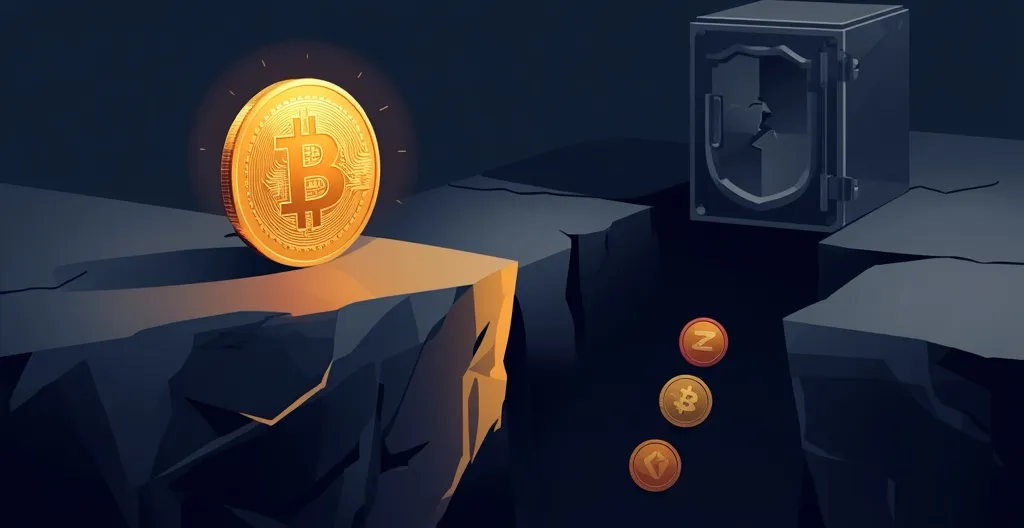
Bridge risk is still a real weakness
The biggest caveat comes from Across Protocol, which temporarily paused Solana deposits because of a bridge infrastructure security issue. The good news is that all in-flight transfers were completed or refunded, and no user losses were reported. That is the correct outcome and credit where it is due.
A bridge is the infrastructure that moves assets or messages between blockchains. It is one of the most sensitive parts of crypto because it links systems with different security assumptions. When bridges fail, they tend to fail in expensive and embarrassing ways. Across’s issue was described as bridge-specific, not a Solana base-layer flaw, and that distinction matters. For more background on the incident, see Across Protocol’s Solana bridge attack report.
Solana itself may be doing fine, but the broader ecosystem still depends on third-party plumbing that can break. That is not unique to Solana; it is a structural problem across crypto. The chain can be fast, cheap, and scalable, yet still sit inside a wider stack where one weak relay or bridge can create a mess.
In other words: strong chain, fragile neighborhood.
Whale wallets and long-range price talk need context
The materials also cite data from RSI Hunter and analyst Ali Martinez showing Solana whale wallets declined by about 3.6% since May. Whale wallets are large token-holding addresses, and traders watch them because big holders can influence liquidity and sentiment.
A decline in whale wallets is not automatically bearish, and it is not automatically healthy distribution either. It may mean large holders are trimming exposure, moving funds around, or simply reacting to market structure. The point is not to turn every wallet change into a prophecy. It is to recognize that big holders matter more than the average trader wants to admit.
The longer-range call mentioned in the notes, a possible move toward $250 sometime between 2026 and 2030, was framed as speculative and contingent on sustained adoption and favorable market structure. That is the right level of caution. Long-horizon price targets in crypto are usually part analysis, part marketing, and part hopium with a tie on.
Serious adoption can support a higher valuation over time. But a price target is not a thesis. Adoption, liquidity, regulation, security, and broader market conditions all have to line up. Most of the time, they do not.
Solana still lives in the attention economy
For all the institutional seriousness, Solana remains a magnet for speculative activity. The notes mention Jimothy The Raccoon surging 186% after a “Seattle raccoon” meme spread on social media. They also cite a case where Solana ecosystem fan tokens and prediction activity spiked after Bukayo Saka was named man of the match in a World Cup game involving England.
That is the chaotic reality of Solana: institutional finance on one side, meme-chasing nonsense on the other. The chain can host tokenized assets and stablecoin settlement in one breath and then get dragged around by a raccoon meme in the next. Crypto never really leaves the casino. It just keeps adding new tables.
These bursts of activity are not the same as durable value creation, but they are not meaningless either. They show that Solana continues to attract users, liquidity, and cultural attention. The problem is that attention is fickle. A meme can drive a spike in volume, but it does not automatically build a lasting business.
What Solana’s setup really says
The clearest takeaway is that Solana is being treated less like a pure speculation token and more like infrastructure. SBI Holdings’ institutional finance plans point to regulated tokenization and stablecoin use. WSOP shows Solana can also be used in a consumer-facing payments environment. Together, those are stronger signals than the usual “we partnered with a blockchain company” press release fluff.
But the bullish case is not frictionless. SOL still needs to hold key price zones, overcome resistance, keep big holders engaged, and avoid infrastructure incidents in the bridge layer that can spook users. Adoption is real, but so are the weak spots.
That is the honest picture. Solana is useful, fast, and increasingly credible for real-world finance use cases. It is also still part of a market that can turn into a clown show without warning. Both things are true, and pretending otherwise is how people end up buying tops and calling it conviction.
Key questions and takeaways
-
Why does SBI Holdings’ move matter?
Because it points Solana toward regulated institutional finance in Japan, including tokenization and yen-backed stablecoin use cases. That is a much stronger signal than a normal marketing partnership. -
Is Solana being used for real payments?
Yes. WSOP said it will allow direct crypto purchases through Solana-powered infrastructure and stablecoin settlement for winners at 2026 WSOP Paradise. That gives Solana a visible consumer use case. -
Was the Across Protocol issue a Solana failure?
No. It was described as a bridge-specific security issue, and user funds were not lost. Still, it shows how fragile cross-chain infrastructure can be. -
Are the SOL price targets dependable?
Not really. Support and resistance levels can help frame trader behavior, but they are not guarantees. The longer-term $250 idea is speculative and depends on adoption and market conditions. -
Do whale-wallet declines matter?
Yes, because large holders can influence liquidity and sentiment. But a decline in whale wallets does not automatically mean bullish or bearish, it needs context.
Further reading
One more useful source on SBI’s Solana push in Japan: