
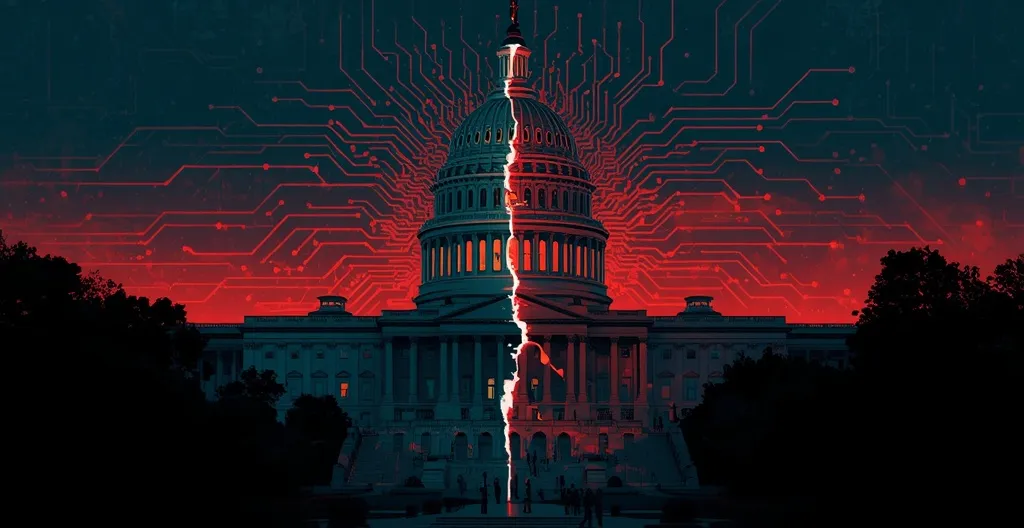
Democrats slam revised crypto bill as ethics fight turns into a Washington knife fight
Senate Republicans released a 616-page revised draft of the CLARITY Act on July 22, and the ethics section at the back of the bill quickly became the main political brawl. Democrats say the new language is still too weak, too narrow, and too willing to let crypto conflicts of interest skate by.
- July 22 draft adds ethics and illicit-finance language
- Democrats say the guardrails are too soft on conflicts and enforcement
- DOJ-only enforcement is the biggest flashpoint
- Industry likes the direction, but several fights are still open
The CLARITY Act is being sold as a compromise that could move a long-stalled digital asset market structure bill toward a Senate vote. But the closer you look, the more it feels like a very Washington deal, a little reform, a lot of carve-outs, and enough unresolved issues to keep lobbyists busy until the next election cycle.
The core fight is ethics. Democrats argue the draft still leaves too much room for President Donald Trump and his family to benefit from crypto, while also making enforcement harder by putting the power almost entirely in the hands of the Justice Department. Republicans, for their part, are pitching the language as tough and historic. Both sides are clearly reading the same text through very different lenses.
According to the draft, public officials or employees and their spouses would be barred from issuing or sponsoring digital assets during their terms of service. In plain English: if you hold office, you are supposed to stay out of the business of launching or promoting coins while you are serving. The draft does not extend that restriction to their children.
The bill also gives officials a way to avoid liability if the relevant assets are placed in a qualified blind trust or divested before taking office. There is an exception for people who used their name, image, or likeness before entering office, so long as the project keeps using it and the assets are properly shielded. That may sound strict on paper, but it still leaves enough wiggle room for lawyers to earn every penny of their fees.
Democrats were not impressed. Senator Angela Alsobrooks called the early reports “an unserious offer” and later described the revised draft as “wild and unserious and stone crazy.” Senator Cory Booker called it “warmed-over stuff, ” saying Democratic priorities were missing from the text. Senator Elizabeth Warren said it “should be dead on arrival, ” and also claimed it “does nothing to stop President Trump from making his next $1.4 billion from crypto.” That is Warren’s accusation, not a proven forecast.
Republicans are pushing back hard. Senate Majority Leader John Thune said the draft will “get a vote, not sure when yet but in the next couple weeks, ” and later told Bloomberg that lawmakers will need to figure out “what the traffic will bear” to get to 60 votes. That is Senate-speak for: the vote is coming, the text is still moving, and nobody should pretend this is done.
The enforcement setup is the real problem. The draft limits charging authority to the U.S. Attorney General, which means state attorneys general cannot bring these cases. That matters because state AGs often move faster and with less political caution than federal prosecutors when fraud or consumer abuse is involved. The bill also requires violations to be proven “knowingly and willfully, ” which is a higher bar than simple negligence or sloppy behavior. In other words, the government would have to show an intentional violation, not just a bad look.
The sunset clause adds another layer of softness. The ethics section would expire on January 20, 2029, and the draft also says conduct that happened on or before that date can still be pursued afterward. That makes the whole thing feel less like a permanent ethics regime and more like a temporary political pressure valve. Useful for getting votes, less useful for pretending the job is fully done.
Cynthia Lummis defended the compromise as a meaningful step, saying history will remember it as the moment “a president chose a higher standard of ethics than the law required of him.” Senator Bernie Moreno went even further, saying, “Don’t listen to the DC Democrat lies: this ethics provision breaks new ground as the most powerful ethics language in US history.” That is classic Hill-scale hype, and it should be treated as political salesmanship rather than an objective legal verdict.
There was even a little tech-world theater mixed into the negotiations. White House crypto adviser Patrick Witt asked Grok for “a comprehensive list of all U.S. Presidents in our nation’s 250-year history who have agreed to an ethics provision restricting their own conduct while in office.” Grok answered: “Zero.” Funny, sure. Also not legislation.
The revised draft goes beyond ethics. It also adds illicit-finance provisions, including $150 million for state and local law enforcement and $150 million for FinCEN, Treasury’s financial crime arm, to support crypto rulemaking and enforcement. Treasury would also get new authority to cut off foreign crypto platforms, certain transactions, or even entire jurisdictions. The bill also tightens rules around crypto ATMs, requiring refunds to fraud victims, blockchain analytics, and wallet-blocking, with new customers limited to individual transactions of $500 and daily aggregate caps of $3, 500.
That part of the bill is harder to dismiss. Crypto ATMs have become one of the favorite tools of scammers because the money moves fast and the victims are often easy to pressure once the scam starts. If the new rules make those kiosks less useful to criminals, good. The space has spent too many years acting like every anti-fraud rule is a personal insult.
Some of the biggest unresolved fights were left untouched. Stablecoin rewards were not addressed in the new language, which is a problem for banks that want those products treated like a threat to the deposit base. The American Bankers Association, the Bank Policy Institute, and the Independent Community Bankers of America said the draft “still puts at risk the local lending that drives economic activity in the U.S.”
Banking groups are not exactly neutral observers here. They see stablecoins and immediately hear the sound of customers wandering away from the old model. Sometimes they have a point. Sometimes they are just protecting their turf with a polished policy memo. The White House Council of Economic Advisers earlier found that a full stablecoin yield ban would increase bank lending by only $2.1 billion, or 0.02% of outstanding loans, according to Galaxy’s reporting. That does not settle the debate, but it does put the panic in perspective.
Prediction markets are another open front. A dozen Senate Democrats sent a letter last week raising concerns about platforms such as Kalshi and Polymarket. The American Gaming Association says states “have now lost more than $1.2 billion in gaming tax revenue from sports bets offered by ‘prediction markets’ outside of the state-regulated system.” That is an industry claim, not a neutral audit, but it shows how quickly “innovation” turns into a turf war when gambling, sports, and crypto start overlapping.
Crypto companies, meanwhile, are mostly cheering the revised text. Coinbase, Andreessen Horowitz, and Ripple Labs all praised the direction of the bill. Chris Dixon of a16z said, “failing to act means innovation will migrate elsewhere, under frameworks devised by others.” Ripple chief legal officer Stuart Alderoty said, “perfect can’t be the enemy of good. Let’s get this done.” Ripple CEO Brad Garlinghouse replied, “my thoughts exactly.”
There is truth in that argument. If the U.S. keeps dithering, the activity will keep moving offshore, and not all of it will be the clean, compliant kind. But “do something” is not the same thing as “write a good law.” Crypto has spent years asking for clarity while also enjoying ambiguity whenever it suits the moment. That trick is getting harder to pull off.
One of the more important but less flashy pieces is the Blockchain Regulatory Certainty Act, or BRCA. It would offer legal protection to developers of noncustodial DeFi platforms, meaning builders who do not control user funds. That distinction matters. Open-source software developers should not be automatically treated like intermediaries every time a criminal uses their code. Punish the thief, not the person who wrote the software.
Market reaction was muted. BTC and ETH stayed mostly flat on Wednesday before dipping slightly later in the day, which suggests traders either do not think the bill is close to passage or believe the key details are already priced in. In crypto, flat often just means Congress has once again made everyone wait around for no good reason.
The bigger question is not whether the CLARITY Act is perfect. It is whether Washington can write digital asset rules without turning every serious provision into a hostage negotiation between banks, crypto firms, regulators, and politicians with their own conflicts to worry about. Right now, that still looks messy.
Key questions and takeaways
-
What changed in the July 22 CLARITY draft?
Senate Republicans added ethics and illicit-finance language to the 616-page draft, while leaving several major disputes unresolved. The ethics section is now the central political bargaining chip. -
Why are Democrats so angry?
They say the text still leaves room for crypto-related profiteering and gives too much power to the Justice Department by blocking state attorneys general from bringing cases. -
What does “knowingly and willfully” mean?
It raises the burden of proof. Prosecutors would have to show the violation was intentional, not just careless or accidental, which makes enforcement harder. -
Does the bill ban officials from all crypto activity?
No. It bars public officials or employees and their spouses from issuing or sponsoring digital assets while in office, but it still allows investment and includes exceptions and safe harbors such as blind trusts or divestment. -
Why are banks pushing back?
They want tighter rules on stablecoin rewards and argue the draft could hurt local lending. Crypto supporters say banks are overstating the threat to protect their own business model. -
What is BRCA and why does it matter?
The Blockchain Regulatory Certainty Act would protect noncustodial DeFi developers, meaning people who build software but do not control user funds. It is meant to stop regulators from treating code writers like custodial financial intermediaries. -
What happens next?
John Thune says a vote is expected “in the next couple weeks, ” but the Senate still has to bridge major disagreements before anything moves. The August 7 summer break is close enough to make everyone nervous.
Further reading
For the original language and a few sharp outside takes on the CLARITY fight, these are worth a look.
- Democrats slam unserious ethics language in revised crypto
- Senate releases latest version of the CLARITY Act
- House Bill 3633 text on Congress.gov
- Galaxy analysis of Senate Banking Committee advances on the CLARITY Act
- Paul Hastings update on the Senate Banking draft and CLARITY Act
- Crypto Market Bill Explained: The CLARITY Act of 2025
- Senate draft CLARITY Act boosts Bitcoin self-custody
- CLARITY Act stalls as stablecoin, DeFi and Trump ethics fights intensify
- CLARITY Act faces Senate roadblocks over ethics, DeFi and developer protections