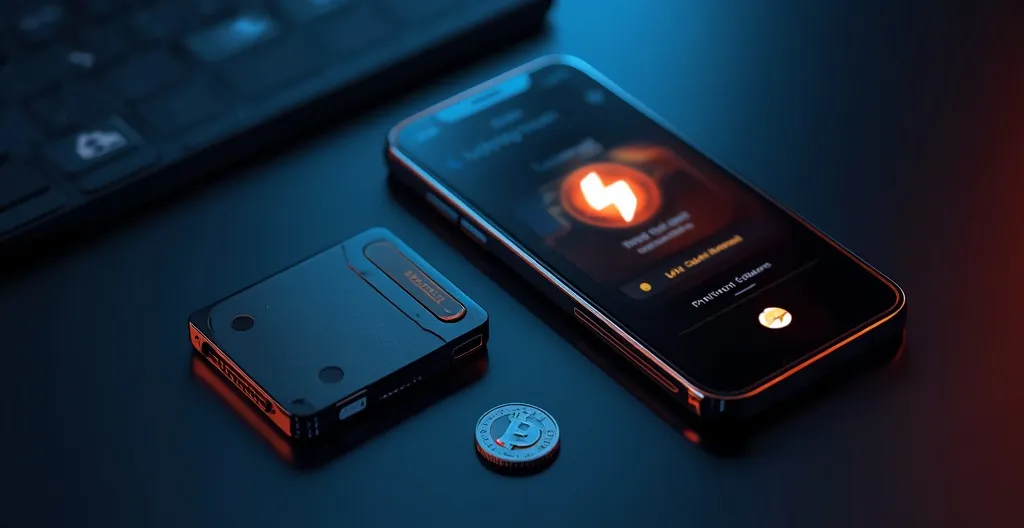
BitBox, the Swiss Bitcoin hardware-wallet maker, has added native Lightning support to its BitBoxApp. That lets users spend from a separate self-custody hot wallet without creating a new recovery phrase.
- One backup, two wallets
- Hardware storage for savings, Lightning for spending
- Less setup, fewer channels, less custodial nonsense
The pitch is simple: keep your long-term Bitcoin on the hardware wallet, move only what you want to spend into a Lightning balance, and use that for fast payments like coffee, invoices, or quick transfers. BitBox is trying to make Bitcoin more usable without pushing users into exchange accounts or seed-phrase chaos.
According to BitBox, the Lightning wallet is derived from the backup already linked to the device, so users do not have to create and secure a separate mnemonic phrase. If access is lost, the same backup used for the main wallet can restore the Lightning wallet too. That matters because asking normal people to juggle multiple recovery phrases is a great way to turn them into anxious archivists.
BitBox also keeps the two balances separate. Bitcoin held through the hardware device remains distinct from funds placed in the Lightning hot wallet, and users can move only the amount they plan to spend. BitBox’s own guidance is practical: treat the Lightning balance like cash in a physical wallet and keep larger amounts in the hardware wallet.
That is the right mental model for most users. Lightning is meant for spending, not hoarding. A hot wallet is convenient because it is online, but that also means it carries more risk than a hardware wallet. Convenience and security rarely arrive as a matching set.
The update is built on the Breez SDK and Spark. In plain English, those tools help wallet developers hide a lot of Lightning’s annoying plumbing from the user. Breez says its SDK supports non-custodial Lightning without users having to host their own infrastructure, and it includes built-in liquidity and channel automation. Spark, developed by Lightspark, is meant to simplify the experience further.
For users, that means they do not have to run a Lightning node, open payment channels, or manually manage inbound and outbound liquidity. That is the sort of abstraction Bitcoin needs if it wants to be usable by people who do not spend their weekends babysitting payment channels. A lot of the old Lightning friction came from infrastructure, not from the idea itself.
The Lightning Network is a second-layer payment system that moves transactions off Bitcoin’s main blockchain and settles balances on-chain later. That is not a bug in Bitcoin. For many Bitcoiners, it is the point. The base layer is best used for final settlement and long-term storage, while Lightning handles the small, fast transactions that make day-to-day payments less clunky.
BitBox users previously needed another wallet or service to use Lightning. With the new setup, they can scan and pay Lightning invoices, generate invoices to receive Bitcoin, get a dedicated Lightning address, and transfer funds between the Lightning balance and the on-chain BitBox wallet inside the app. Fewer apps, fewer handoffs, fewer places for a custodial middleman to sneak in and muddy the water.
That simplicity comes with a catch, of course. Hiding Lightning complexity from the user is good for adoption, but it also means trust shifts toward the wallet implementation and the infrastructure behind it. Lightning still has tradeoffs, including liquidity constraints, routing issues, and the usual risks that come with keeping spending money online. The UX may be smoother, but “easy” is not the same thing as “invincible.”
The broader trend here is obvious: Bitcoin wallets are increasingly trying to split the job into two modes. Hardware wallets for savings. Lightning wallets for spending. That is a practical answer to a real problem, and one that avoids pretending the base layer should do everything. Ideologues hate that kind of nuance. Engineers usually call it progress.
There is also the unavoidable tax wrinkle for U.S. users. The IRS treats digital assets as property for federal income-tax purposes, and using cryptocurrency to pay for goods or services is treated as a disposal. In other words, Lightning may make payments faster and cheaper, but it does not make them tax-free. A taxpayer still needs records for the date of the transaction, the amount of digital assets involved, the dollar value at the time, and the associated basis.
That is one of crypto’s great little jokes: the payment layer gets sleek, while the paperwork stays gloriously old-school. Faster settlement does not cancel out recordkeeping. It just means the tax headache can arrive more quickly.
Key questions and takeaways
-
What did BitBox add?
BitBoxApp now includes native Lightning support, giving users a self-custody hot wallet for fast Bitcoin payments. -
Does this replace cold storage?
No. BitBox is keeping the roles separate: the hardware wallet is for larger, longer-term holdings, while the Lightning balance is for spending. -
Why does the backup design matter?
Because users can recover the Lightning wallet with the same backup tied to their BitBox device instead of managing another recovery phrase. -
What does Breez SDK and Spark do here?
They help abstract away Lightning infrastructure so users do not have to run a node, open channels, or manage liquidity themselves. -
Does Lightning make Bitcoin purchases tax-free in the U.S.?
No. The IRS still treats crypto spending as a disposal, so records and basis tracking still matter.
BitBox adds Lightning wallet without a new backup phrase is not a miracle cure, and it does not erase Lightning’s tradeoffs. But it does make self-custody more usable, which is a bigger deal than the market often admits. If Bitcoin is going to work for ordinary payments without surrendering control to custodians, this is the kind of UX that actually gets us there.
Lightning Network Economics: Can Bitcoin Routing Nodes Earn is part of the same uncomfortable reality: the infrastructure only matters if it can be used without turning every payment into a homework assignment. And if you want a broader look at merchant adoption, Square Brings Bitcoin Payments to 1 Million U.S. Merchants shows why the payments layer is where Bitcoin starts getting interesting for the real world instead of just the echo chamber.